Gigaswap - Audit
CertiK reviewed GigaSwap (Gigaswap - Audit) on 7 Feb 2024: 30 findings, 1 critical; 25 marked fixed, 5 open.
Report hosted on skynet.certik.com.
Trustblock does not review code.
Findings30
Statuses are the security firm’s own, from its report.
| Severity | Open | Acknowledged | Fixed |
|---|---|---|---|
| Critical | 0 | 0 | 1 |
| High | 2 | 0 | 3 |
| Medium | 0 | 0 | 8 |
| Low | 3 | 0 | 13 |
HighCentralization Related RisksOpen
In the contract `Farming` the role `_owner` has authority over the functions shown in the diagram below. Any compromise to the `_owner` account may allow the hacker to take advantage of this authority.  In the contract `FeeSettings` the role `_owner` has authority over the functions shown in the diagram below. Any compromise to the `_owner` account may allow the hacker to take advantage of this authority. 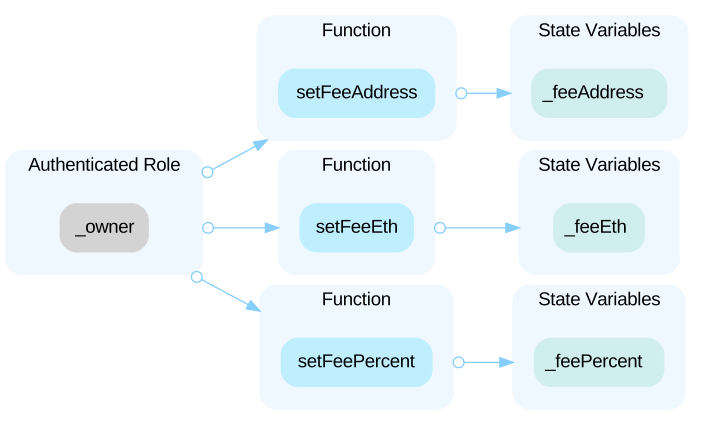 In the contract `FeeSettingsWriter` the role `_factory` has authority over the functions shown in the diagram below. Any compromise to the `_factory` account may allow the hacker to take advantage of this authority. 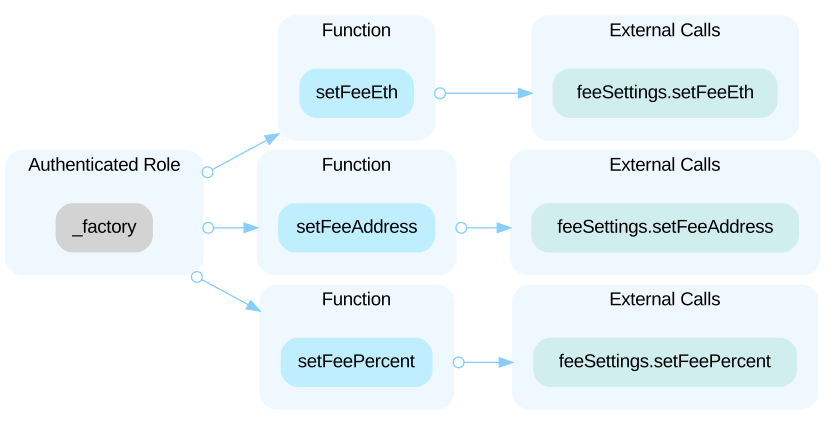 In the contract `FeeSettingsWriter` the role `factory` has authority over the functions shown in the diagram below. Any compromise to the `factory` account may allow the hacker to take advantage of this authority. 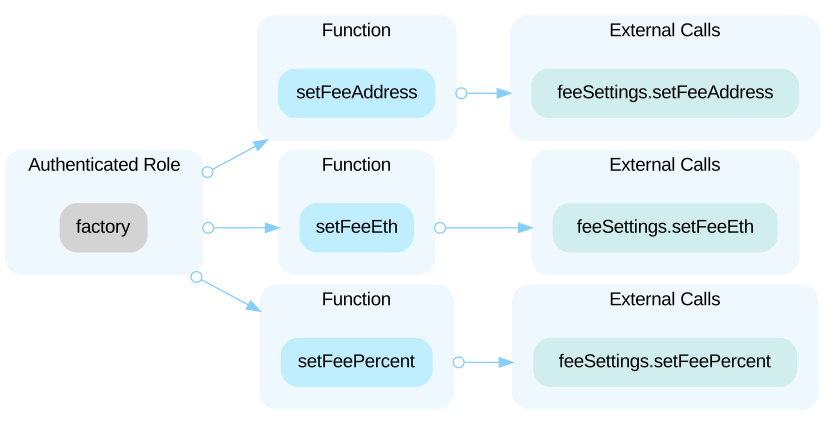 In the contract `Erc20Sale` the role `antibot` has authority over the functions shown in the diagram below. Any compromise to the `antibot` account may allow the hacker to take advantage of this authority. 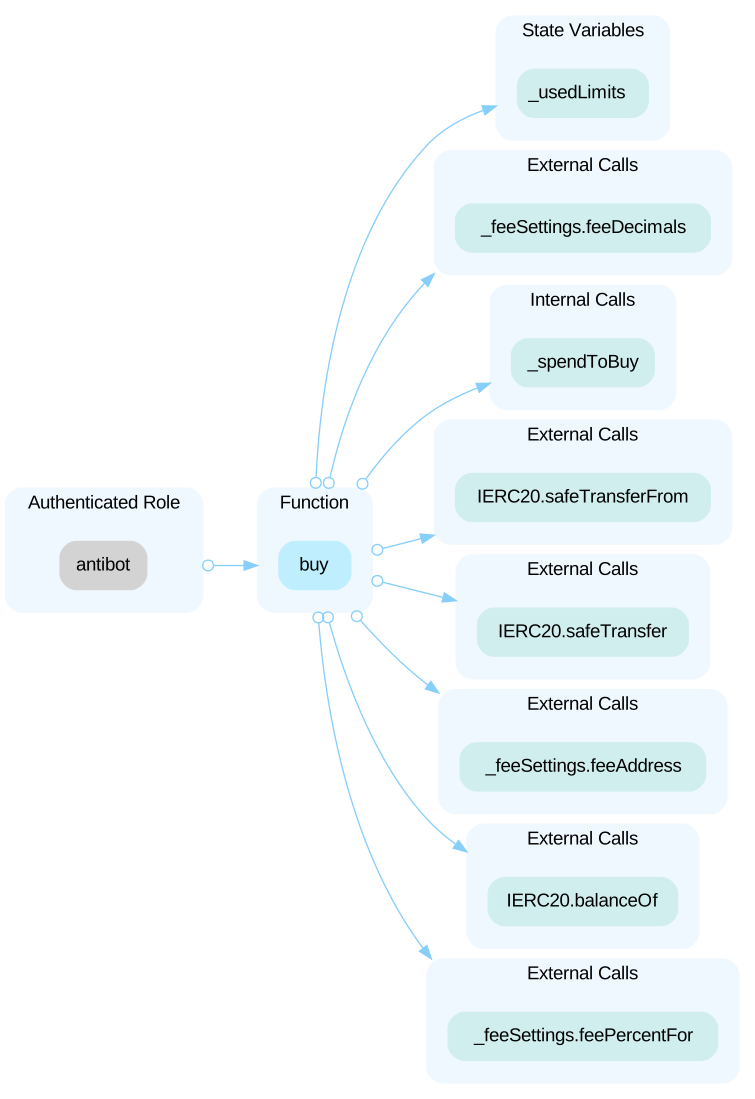 In the contract `Erc20SaleWeth` the role `antibot` has authority over the functions shown in the diagram below. Any compromise to the `antibot` account may allow the hacker to take advantage of this authority. 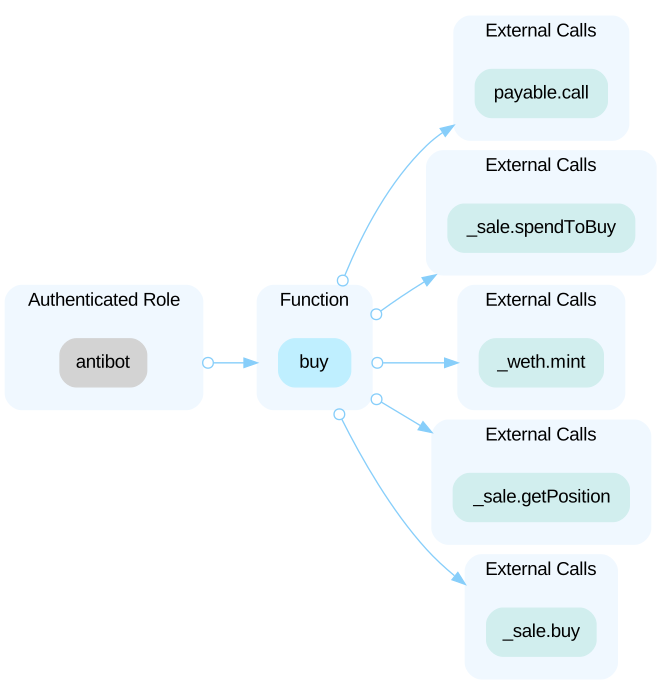 In the contract `Ownable` the role `_owner` has authority over the functions shown in the diagram below. Any compromise to the `_owner` account may allow the hacker to take advantage of this authority. 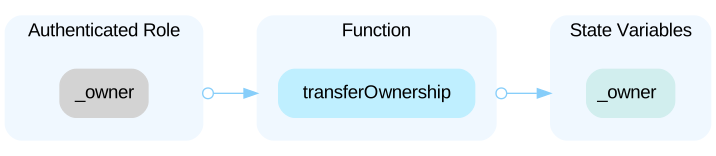 In the contract `TradableErc20` the role `_owner` has authority over the functions shown in the diagram below. Any compromise to the `_owner` account may allow the hacker to take advantage of this authority. 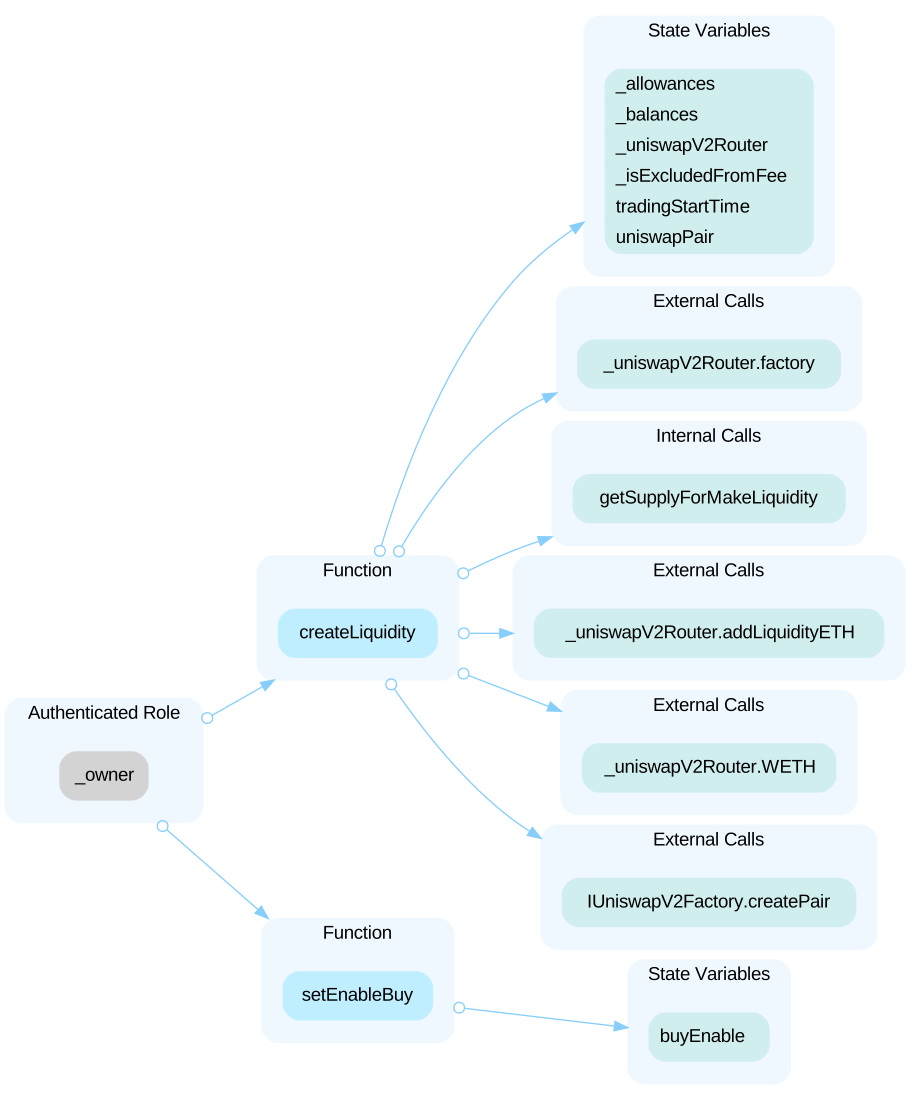 In the contract `TradableErc20` the role `_withdrawAddress` has authority over the functions shown in the diagram below. Any compromise to the `_withdrawAddress` account may allow the hacker to take advantage of this authority. 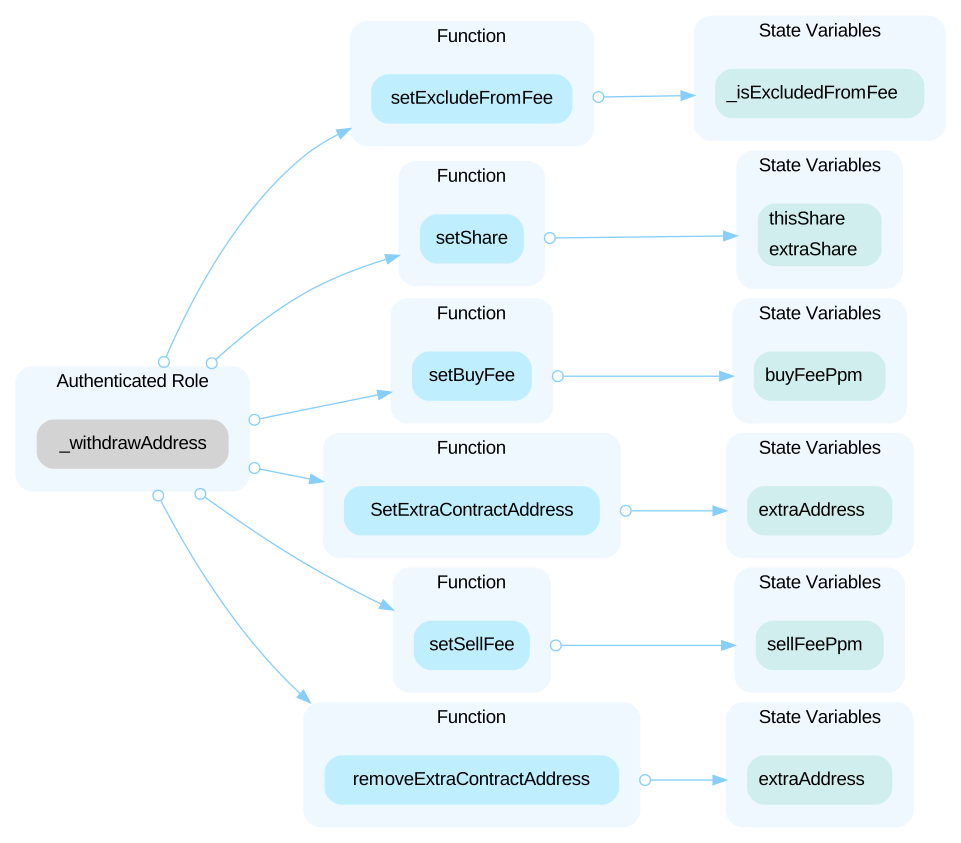 In the contract `TradableErc20` the role `_withdrawer` has authority over the functions shown in the diagram below. Any compromise to the `_withdrawer` account may allow the hacker to take advantage of this authority. 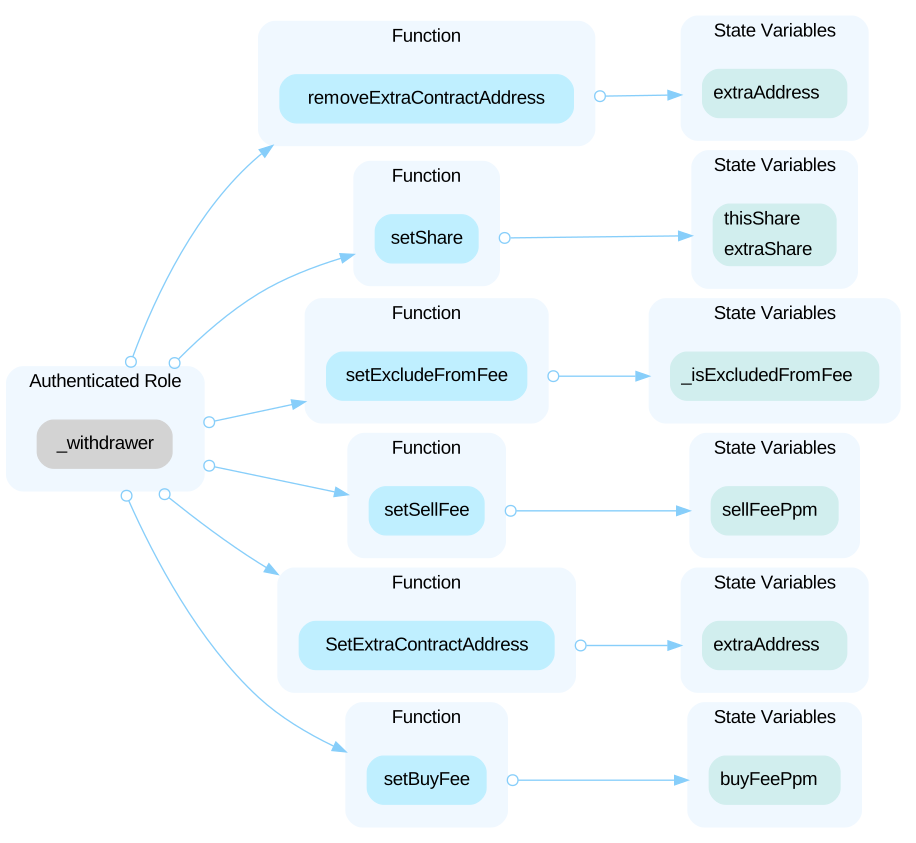 In the contract `Withdrawable` the role `_withdrawAddress` has authority over the functions shown in the diagram below. Any compromise to the `_withdrawAddress` account may allow the hacker to take advantage of this authority. 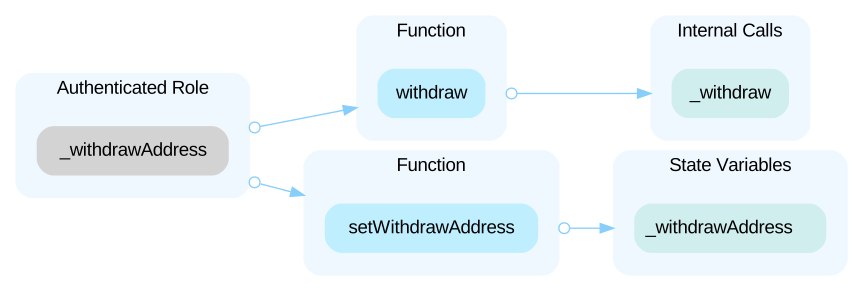 In the contract `Withdrawable` the role `_withdrawer` has authority over the functions shown in the diagram below. Any compromise to the `_withdrawer` account may allow the hacker to take advantage of this authority. 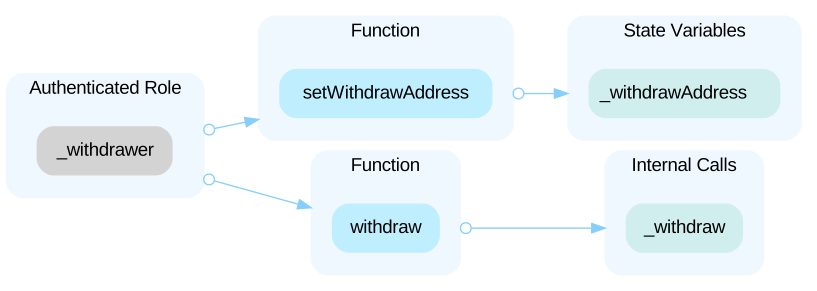 In the contract `Erc20ForFactory` the role `_factory` has authority over the functions shown in the diagram below. Any compromise to the `_factory` account may allow the hacker to take advantage of this authority. 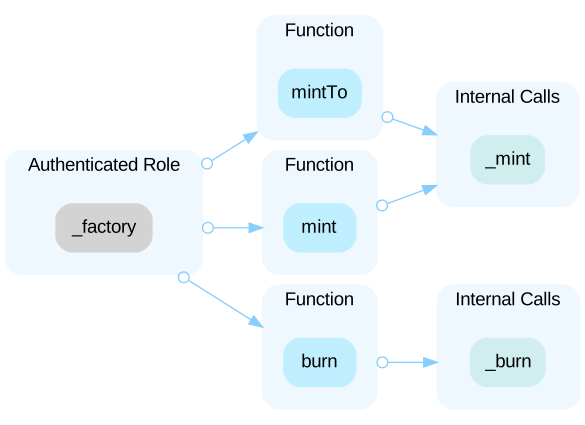 In the contract `Erc20ForFactory` the role `factory` has authority over the functions shown in the diagram below. Any compromise to the `factory` account may allow the hacker to take advantage
HighFunction `allowance` of Contract `gWETH` ReturnsOpen
It is expected that calls of the form `allowance(owner, spender)` return the allowance that address `spender` has over tokens held by address `owner`. However, the implementation of `allowance` in contract `gWETH` returns different values when the `_withoutAllowance[spender]` is `true`. The owner address has the privilege to assign as many addresses as possible to have a max allowance returned no matter what the owner address is.
LowDiscussion on `antibot` addressOpen
In the contracts `Erc20Sale` and `Erc20SaleWeth`, we noticed that there is an input address called `antibot` in the `buy()` functions. The `antibot` address is used to check if the `msg.sender` is equal to the `antibot` address. From the naming of `antibot` we guess the purpose is to not allow smart contracts to call the address? If so, the current implementation of `require(msg.sender == antibot, 'antibot')` will not help.
LowLack of DocumentationOpen
The Gigaswap contract lacks comments, natspec, or documentation explaining the specific use case of each function.
LowPotential Flashloan AttackOpen
Flash loans are a way to borrow large amounts of money for a certain fee. The requirement is that the loans need to be returned within the same transaction in a block. If not, the transaction will be reverted. The `feePercentFor()` and `feeEthFor()` function relies on the balance of gigaToken that are based on-chain, meaning they are susceptible to flash-loan attacks by borrowing money to increase the account amount.
Contracts in scope
No deployed address is recorded for this audit.
The report names a repository or files. Open the report to see its scope.
Repository and files the report names (87)
- contracts/fee/vote/FeeSettingsSetFeeAddressVote.sol
- contracts/swapper/DealsController.sol
- contracts/lib/erc20/IErc20ForFactory.sol
- contracts/lib/erc20/Erc20ForFactory.sol
- contracts/weth/gWETH.sol
- contracts/fee/vote/FeeSettingsWriter.sol
- contracts/fee/FeeSettings.sol
- contracts/giga_swap_erc20_token/vote/executors/GigaSwapTokenRemoveExtraContractAddressVote.sol
- contracts/fixed_price_sales/Erc20SaleWeth.sol
- contracts/lib/erc20/Erc20Min.sol
- contracts/swapper/DealPointsController.sol
- contracts/swapper/DealPointData.sol
- contracts/giga_swap_erc20_token/GigaSwapToken.sol
- contracts/votes/IVote.sol
- contracts/position_trading/algorithms/TradingPair/TradingPairData.sol
- contracts/position_trading/PositionsFactory.sol
- contracts/giga_swap_erc20_token/vote/executors/GigaSwapTokenSetExtraContractAddressVote.sol
- contracts/votes/VoteExecutorBase.sol
- contracts/fixed_price_sales/IErc20Sale.sol
- contracts/swapper/DealPointRef.sol
- contracts/position_trading/algorithms/TradingPair/ITradingPairFeeDistributer.sol
- contracts/lib/erc20/IErc20ForFactoryFactory.sol
- contracts/fee/FeeSettingsDecorator.sol
- contracts/position_trading/AssetData.sol
- contracts/swapper/GigaSwap.sol
- contracts/swapper/IDealPointsController.sol
- contracts/votes/IVoteExecutor.sol
- contracts/swapper/DealsFactory.sol
- contracts/position_trading/assets/AssetsControllerBase.sol
- contracts/swapper/Deal.sol
- contracts/position_trading/algorithms/PositionAlgorithm.sol
- contracts/giga_swap_erc20_token/vote/GigaSwapTokenWriter.sol
- contracts/position_trading/AssetCreationData.sol
- contracts/giga_swap_erc20_token/vote/executors/GigaSwapTokenSetShareVote.sol
- contracts/weth/IgWETH.sol
- contracts/swapper/IDealsController.sol
- contracts/fixed_price_sales/IErc20SaleCounterOffer.sol
- contracts/position_trading/algorithms/TradingPair/TradingPairConstraints.sol
- contracts/lib/ownable/IOwnable.sol
- contracts/fee/IFeeSettingsSetters.sol
- contracts/position_trading/algorithms/TradingPair/ITradingPairAlgorithm.sol
- contracts/swapper/plugins/erc721/erc721item/Erc721ItemDealPointsController.sol
- contracts/position_trading/ItemRefAsAssetLibrary.sol
- contracts/swapper/plugins/erc20/IErc20DealPointsController.sol
- contracts/lib/ownable/Ownable.sol
- contracts/votes/VoteDataLib.sol
- contracts/swapper/plugins/erc721/erc721count/IErc721CountDealPointsController.sol
- contracts/position_trading/assets/Erc721ItemAssetsController.sol
- contracts/swapper/plugins/erc721/erc721count/Erc721CountDealPointsController.sol
- contracts/lib/factories/ContractData.sol
- contracts/position_trading/AssetTransferData.sol
- contracts/swapper/plugins/erc20/Erc20DealPointsController.sol
- contracts/giga_swap_erc20_token/vote/executors/GigaSwapTokenSetBuyFeeVote.sol
- contracts/fee/IFeeSettings.sol
- contracts/position_trading/algorithms/TradingPair/FeeSettings.sol
- contracts/lib/erc20/Erc20ForFactoryFactory.sol
- contracts/giga_swap_erc20_token/vote/executors/GigaSwapTokenSetWithdrawAddressVote.sol
- contracts/giga_swap_erc20_token/vote/executors/GigaSwapTokenSetSellFeeVote.sol
- contracts/position_trading/algorithms/PositionLocker/PositionLockerAlgorithm.sol
- contracts/swapper/plugins/erc721/erc721item/IErc721ItemDealPointsController.sol
- contracts/position_trading/IPositionsController.sol
- contracts/votes/VoteData.sol
- contracts/position_trading/algorithms/TradingPair/TradingPairReader.sol
- contracts/lib/factories/HasFactories.sol
- contracts/position_trading/PositionsController.sol
- contracts/fee/vote/FeeSettingsSetFeePercentVote.sol
- contracts/giga_swap_erc20_token/vote/IGigaSwapTokenSetters.sol
- contracts/votes/Vote.sol
- contracts/fixed_price_sales/Erc20Sale.sol
- contracts/farming/IFarming.sol
- contracts/position_trading/ItemRef.sol
- contracts/swapper/DealPointDataInternal.sol
- contracts/position_trading/IAssetsController.sol
- contracts/position_trading/assets/Erc20AssetsController.sol
- contracts/lib/factories/IHasFactories.sol
- contracts/fee/vote/FeeSettingsSetFeeEthVote.sol
- contracts/position_trading/IAssetListener.sol
- contracts/position_trading/algorithms/TradingPair/TradingPairFeeDistributer.sol
- contracts/lib/ownable/OwnableSimple.sol
- contracts/swapper/plugins/ether/IEtherDealPointsController.sol
- contracts/position_trading/PositionSnapshot.sol
- contracts/position_trading/algorithms/PositionLockerBase.sol
- contracts/position_trading/assets/EthAssetsController.sol
- contracts/swapper/plugins/ether/EtherDealPointsController.sol
- contracts/position_trading/IPositionAlgorithm.sol
- contracts/position_trading/algorithms/TradingPair/TradingPairAlgorithm.sol
- contracts/farming/Farming.sol
Part of GigaSwap’s security record
 GigaSwap
Security firm
 CertiK
1,044 projects reviewed · 1,375 reports · latest May 2025
See CertiK’s auditsSomething wrong on this page? A missing report, a wrong date, a finding that was fixed since. Tell us and we check it against its source.
Tell us