0xf4445049080ae2fde75aaf0c6e603fb55875f02c
As of 21 Nov 2026, Trustblock’s record holds 0xf4445049080ae2fde75aaf0c6e603fb55875f02c on Ethereum as a contract of DIGIKA. 1 audit report on Trustblock lists this address: CertiK, 27 Feb 2025. 9 findings in it are recorded as open or acknowledged.
Each report’s scope as stored on Trustblock names this address on Ethereum.
| Audit | Security firm | Date | Commit named in the report | Report |
|---|---|---|---|---|
| DIGIKA - Audit | CertiK | Not recorded (see the report) | Open |
2 High, 1 Medium, 6 Low. In the firm’s own words; statuses are the firm’s, from each report.
In the contract `DGKToken`, the role `_owner` has authority over the functions shown in the diagram below. Any compromise to the `_owner` account may allow the hacker to take advantage of this authority and set address fee exemption status, set or unset a minter status, remove an address from the blacklist, set the transaction fee, set the paused state, set the treasury wallet address, set the transaction cooldown, blacklist an address, and mint tokens to a specified address. 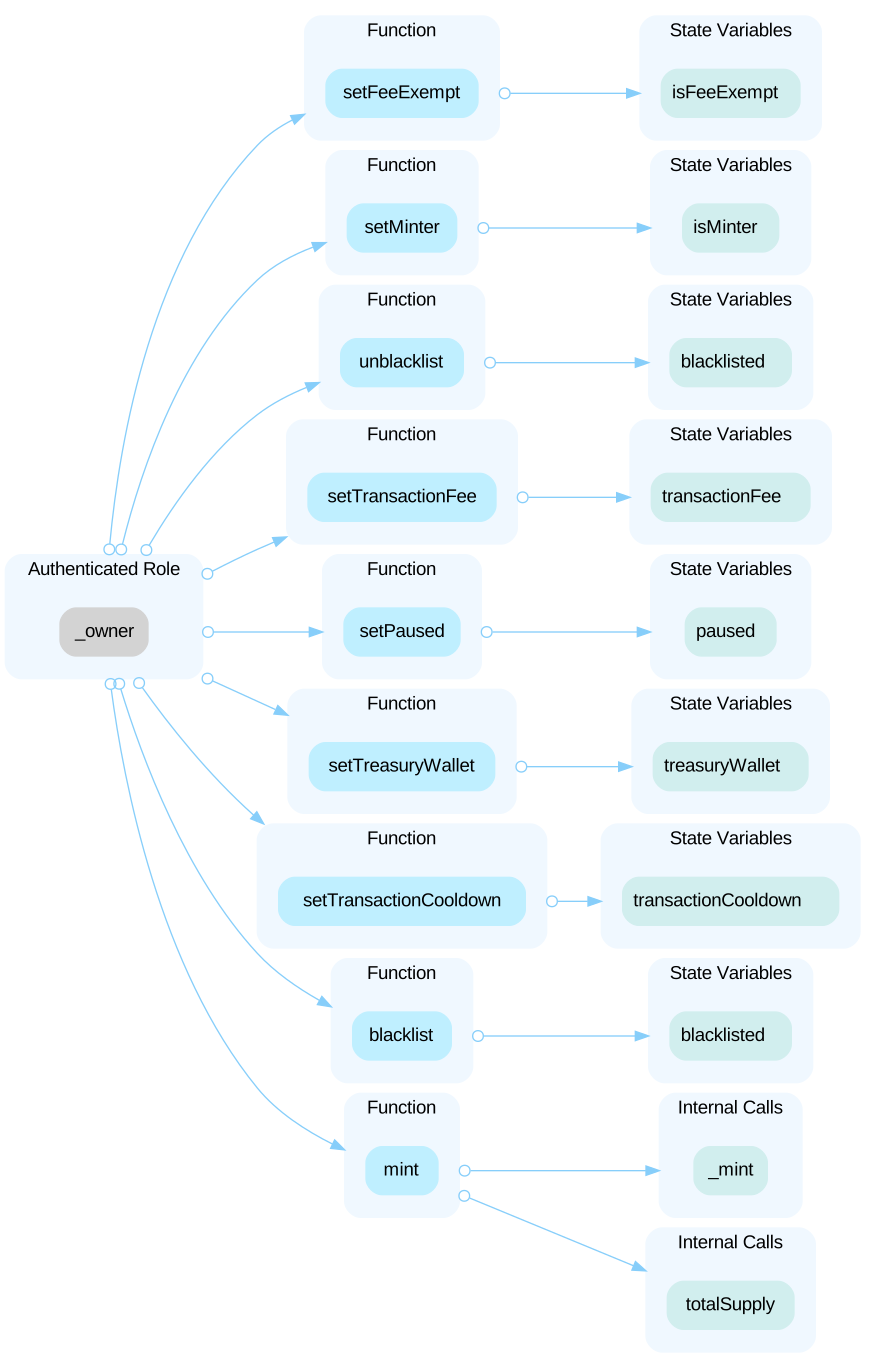 In the contract `DGKToken`, the role `isMinter` has authority over the functions shown in the diagram below. Any compromise to the `isMinter` account may allow the hacker to take advantage of this authority and mint tokens to a specified address. 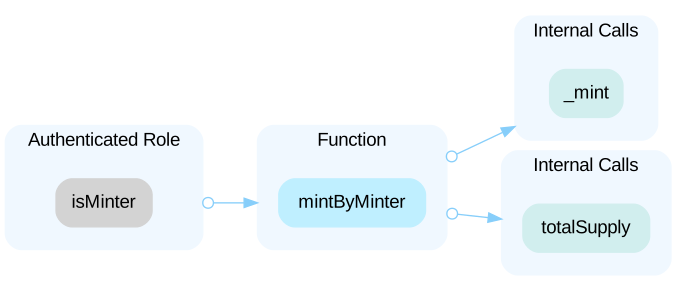 In the contract `Lock`, the role `owner` has authority over the functions shown in the diagram below. Any compromise to the `owner` account may allow the hacker to take advantage of this authority and withdraw the contract balance if conditions are met. 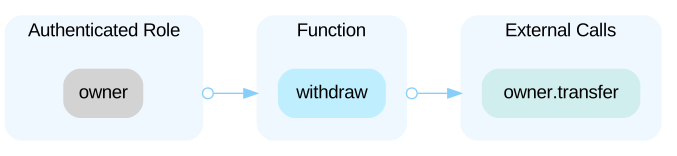 In the contract `Ownable`, the role `_owner` has authority over the functions shown in the diagram below. Any compromise to the `_owner` account may allow the hacker to take advantage of this authority and renounce the current ownership or transfer ownership to a new owner. 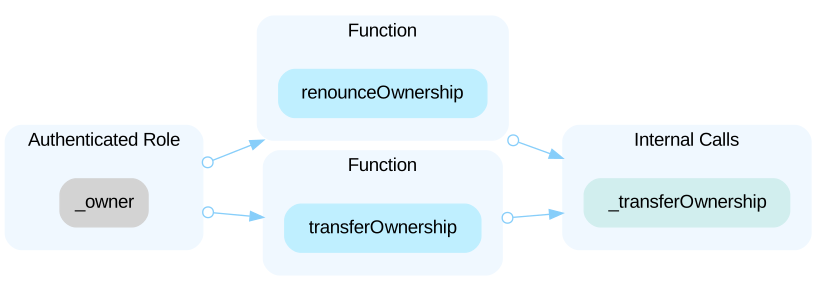
The audit on Trustblock · Open the reportHalf of the max supply `DGK` tokens are sent to the contract deployer or one or several externally-owned account (EOA) addresses. This is a centralization risk because the deployer or the owner(s) of the EOAs can distribute tokens without obtaining the consensus of the community. Any compromise to these addresses may allow a hacker to steal and sell tokens on the market, resulting in severe damage to the project.
The audit on Trustblock · Open the reportAs per the design, there's a cooldown period for transferring tokens from an account, initially set at 15 seconds. This prevents the sender from making continuous transfers, which could cause unexpected issues. For instance, if the token is listed on an exchange like `Uniswap`, transferring tokens from the pool to a target address requires a 15-second wait when users purchase tokens or remove liquidity. Frequent transactions could result in failures due to this delay. ```solidity function _transfer(address sender, address recipient, uint256 amount) internal virtual override { ... // Anti-MEV : impose un cooldown entre les transactions de la m├¬me adresse. require( block.timestamp >= lastTransactionTime[sender] + transactionCooldown, "Anti-MEV cooldown" ); lastTransactionTime[sender] = block.timestamp; ... } ```
The audit on Trustblock · Open the reportAccording to the design, when an account does not meet specific conditions and the fee is non-zero, a transaction fee is applied. ```solidity bool skipFee = (sender == address(this) || recipient == address(this) || isFeeExempt[sender] || isFeeExempt[recipient]); ```
The audit on Trustblock · Open the reportThe `ERC20Mock` and `Lock` contracts appear to lack meaningful functionality, as they do not offer any significant features.
The audit on Trustblock · Open the reportThe codebase contains multiple Solidity versions, which can lead to unexpected behavior, potential vulnerabilities, difficulties in maintaining the code, and inconsistencies in the execution of the smart contract. Using different versions may also result in increased complexity during code auditing, as different security features and bug fixes are present in different versions of the compiler. Versions used: `^0.8.0`, `^0.8.1`, `^0.8.18` ```solidity=1093 pragma solidity ^0.8.0; ``` `^0.8.0` is used in DGKToken.sol file. ```solidity=1093 pragma solidity ^0.8.0; ``` ```solidity=700 pragma solidity ^0.8.1; ``` `^0.8.1` is used in DGKToken.sol file. ```solidity=700 pragma solidity ^0.8.1; ``` ```solidity=1331 pragma solidity ^0.8.18; ``` `^0.8.18` is used in DGKToken.sol file. ```solidity=1331 pragma solidity ^0.8.18; ```
The audit on Trustblock · Open the reportAccording to the design, blacklisted addresses cannot receive or send tokens. ```solidity function _transfer(address sender, address recipient, uint256 amount) internal virtual override { require(!paused, "Token is paused"); require(!blacklisted[sender], "Sender blacklisted"); require(!blacklisted[recipient], "Recipient blacklisted"); ... } ``` However, there is no blacklist check for the target address when minting tokens, which may result in these minted tokens being non-transferable.
The audit on Trustblock · Open the reportThere should always be events emitted in the sensitive functions that are controlled by centralization roles.
The audit on Trustblock · Open the reportIt is not recommended to use Solidity's `transfer()` and `send()` functions for transferring native tokens, since some contracts may not be able to receive the funds. Those functions forward only a fixed amount of gas (2300 specifically) and the receiving contracts may run out of gas before finishing the transfer. Also, EVM instructions' gas costs may increase in the future. Thus, some contracts that can receive now may stop working in the future due to the gas limitation. ```solidity=1361 owner.transfer(address(this).balance); ``` - `Lock.withdraw` uses `transfer()`.
The audit on Trustblock · Open the reportThe DIGIKA security record · Every DIGIKA address · This address on the explorer