NetMind-Audit
CertiK reviewed NetMind (NetMind-Audit) on 4 Mar 2024: 42 findings, 0 critical; 28 marked fixed, 4 acknowledged, 10 open.
Report hosted on skynet.certik.com.
Trustblock does not review code.
Findings42
Statuses are the security firm’s own, from its report.
| Severity | Open | Acknowledged | Fixed |
|---|---|---|---|
| Critical | 0 | 0 | 0 |
| High | 0 | 2 | 5 |
| Medium | 0 | 2 | 4 |
| Low | 10 | 0 | 19 |
HighCentralization Related RisksAcknowledged
In the contract `Ownable` the role `_owner` has authority over the functions shown in the diagram below. Any compromise to the `_owner` account may allow the hacker to take advantage of this authority. - transfer ownership of the contract to a new account - renounce ownership will leave the contract without an owner 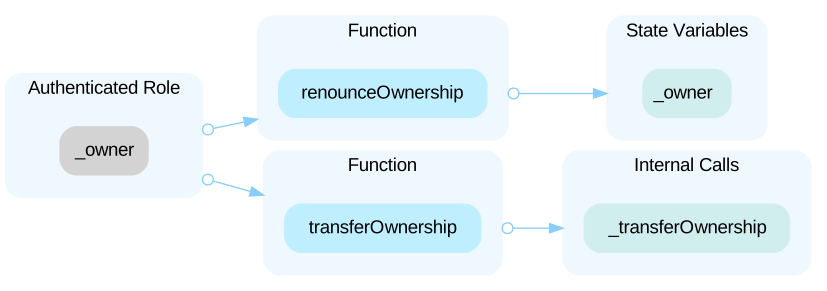 In the contract `AccountManage` the role `_auth` has authority over the functions shown in the diagram below. Any compromise to the `_auth` account may allow the hacker to take advantage of this authority. - freeze user's tokens for the job - deduct assets from user's account 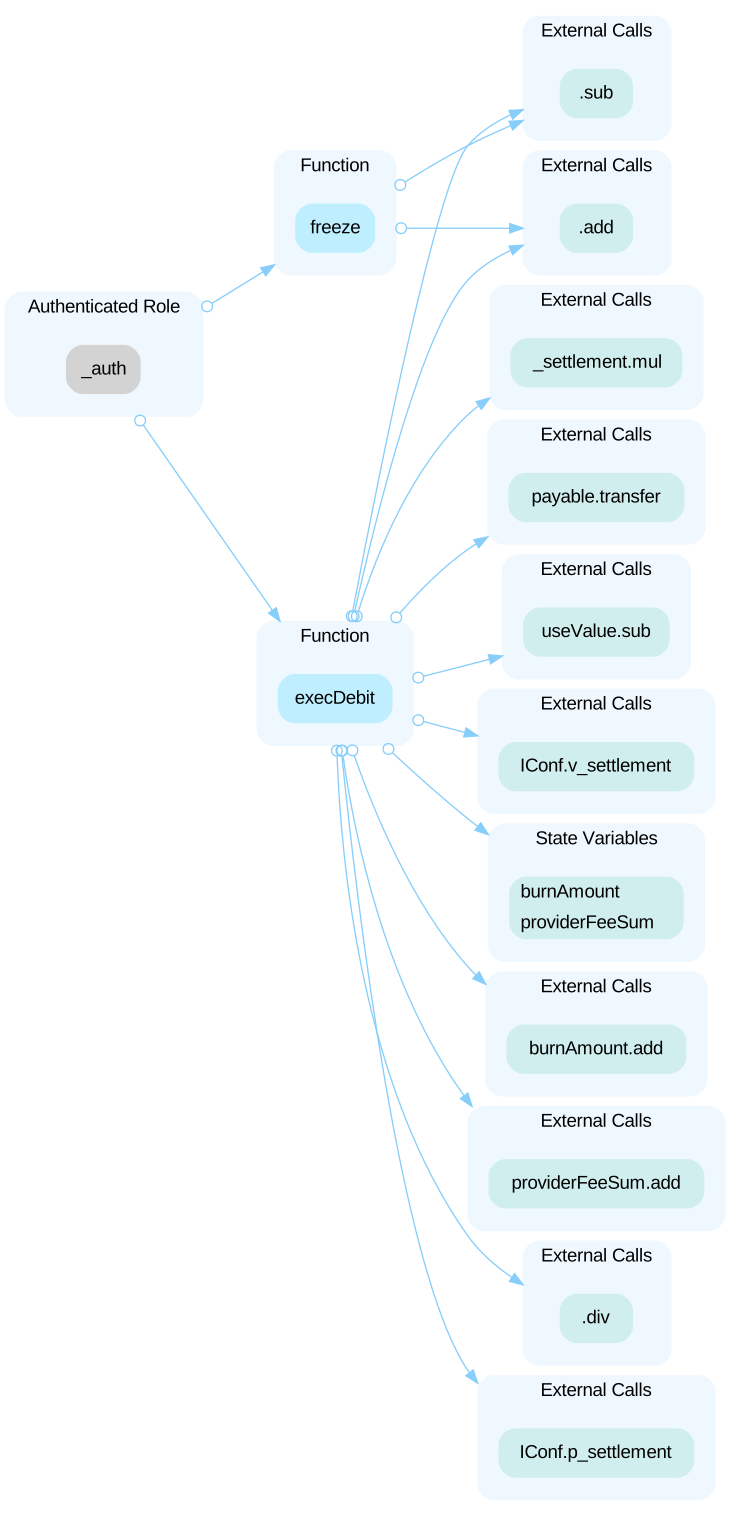 In the contract `AccountManage` the role `_executor` has authority over the functions shown in the diagram below. Any compromise to the `_executor` account may allow the hacker to take advantage of this authority. - init user’s information - update user‘s address 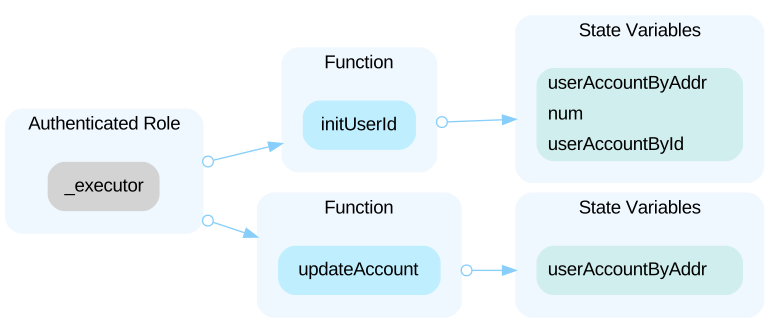 In the contract `AccountManage` the role `_owner` has authority over the functions shown in the diagram below. Any compromise to the `_owner` account may allow the hacker to take advantage of this authority. - set `signNum`, `authSta` 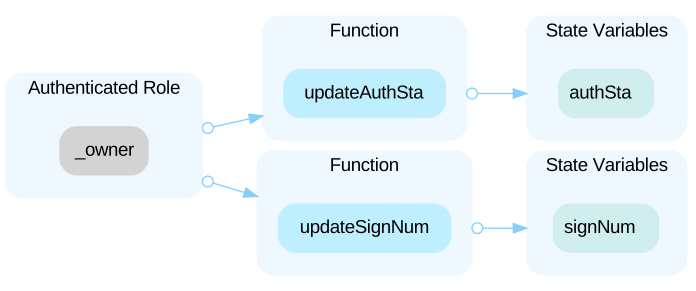 In the contract `CommunityFund` the role `_owner` has authority over the functions shown in the diagram below. Any compromise to the `_owner` account may allow the hacker to take advantage of this authority. - set `LockTime`, `votingPeriod` - add node information - delete node information 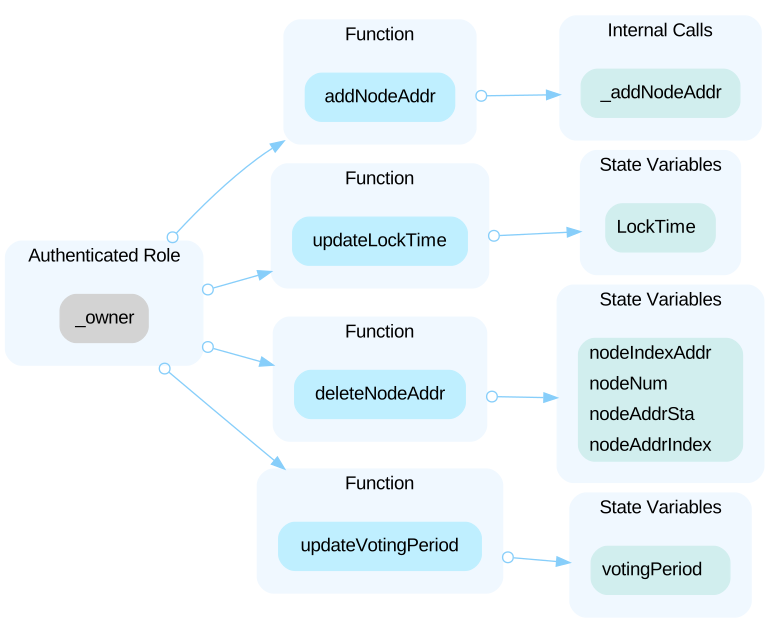 In the contract `Conf` the role `wards` has authority over the functions shown in the diagram below. Any compromise to the `wards` account may allow the hacker to take advantage of this authority. - grant/revoke `wards` role. - update state values of `Conf` contract. - update accountant addresses. In the contract `Crosschain` the role `_owner` has authority over the functions shown in the diagram below. Any compromise to the `_owner` account may allow the hacker to take advantage of this authority. - set `trader`, `exector`, `threshold`, `signNum`, `pause`, `chargeRate`, `tokenSta` - withdraw the fee - add node information - delete node information 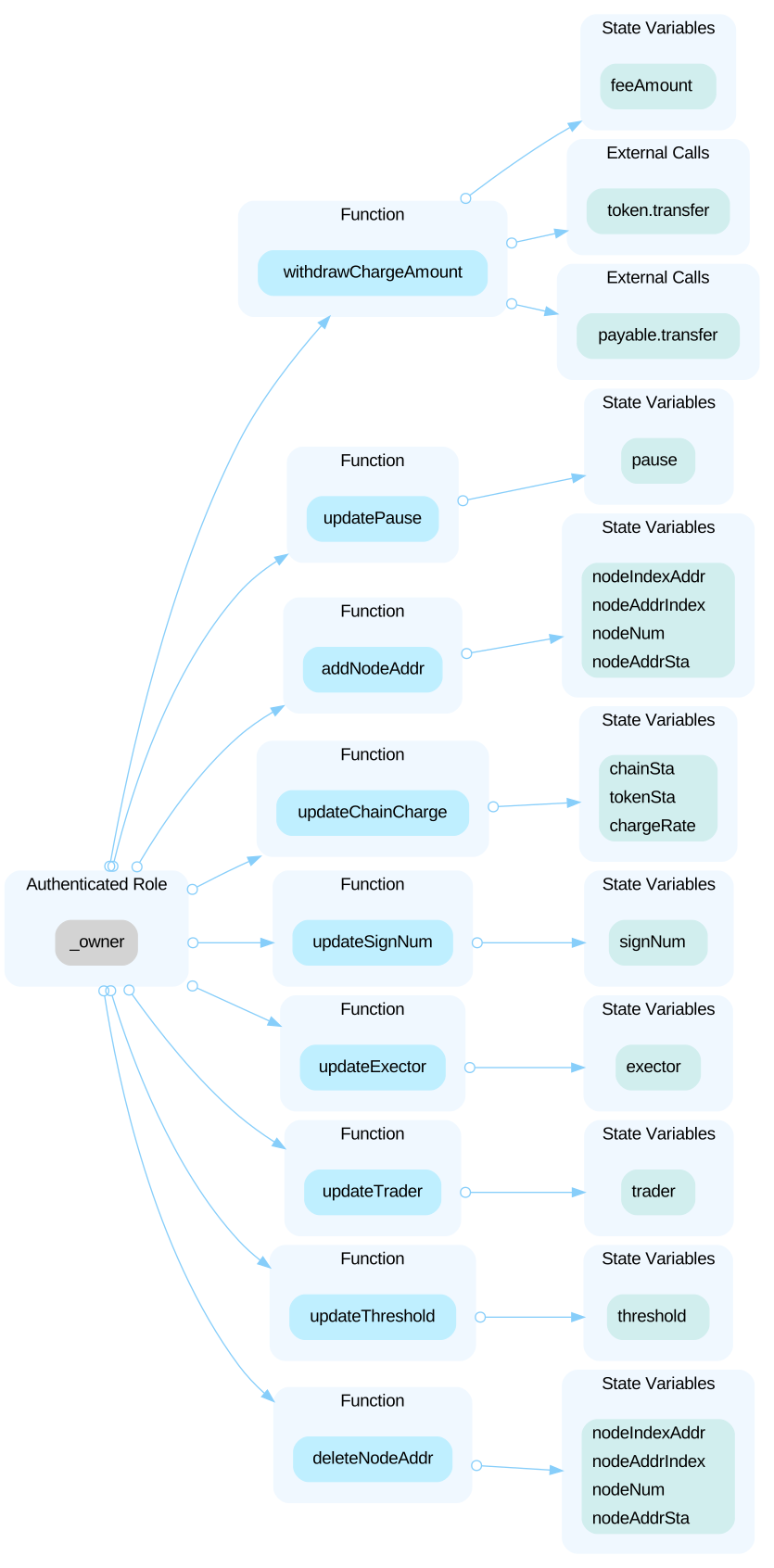 In the contract `Crosschain` the role `exector` has authority over the functions shown in the diagram below. Any compromise to the `exector` account may allow the hacker to take advantage of this authority. - pause the contract 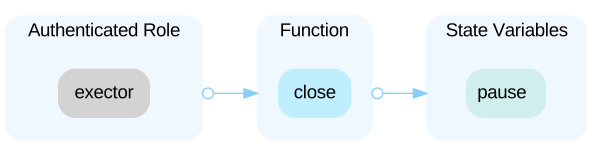 In the contract `Crosschain` the role `trader` has authority over the functions shown in the diagram below. Any compromise to the `trader` account may allow the hacker to take advantage of this authority. - transfer the token for the user 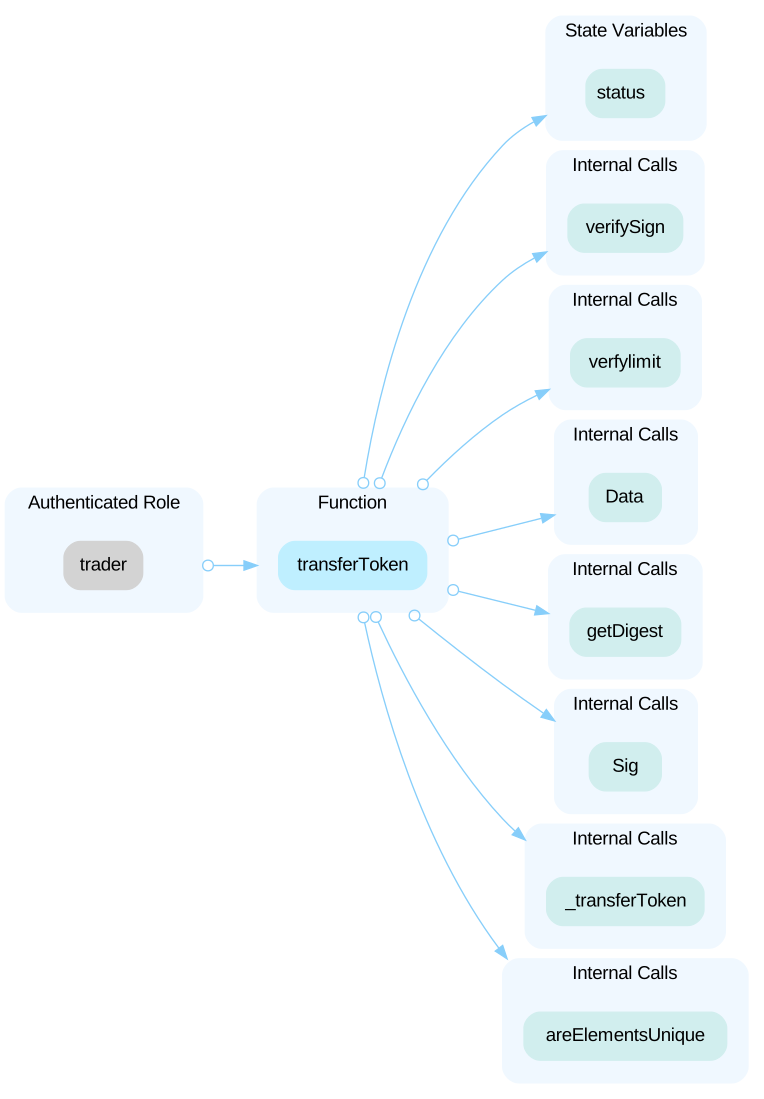 In the contract `Ledger` the role `accountant` has authority over the functions shown in the diagram below. Any compromise to the `accountant` account may allow the hacker to take advantage of this authority. - update ledger. In the contract `Pledge` the role `_nodeaddr` has authority over the functions shown in the diagram below. Any compromise to the `_nodeaddr` account may allow the hacker to take advantage of this authority. - stake NMT or ERC20 token assets. 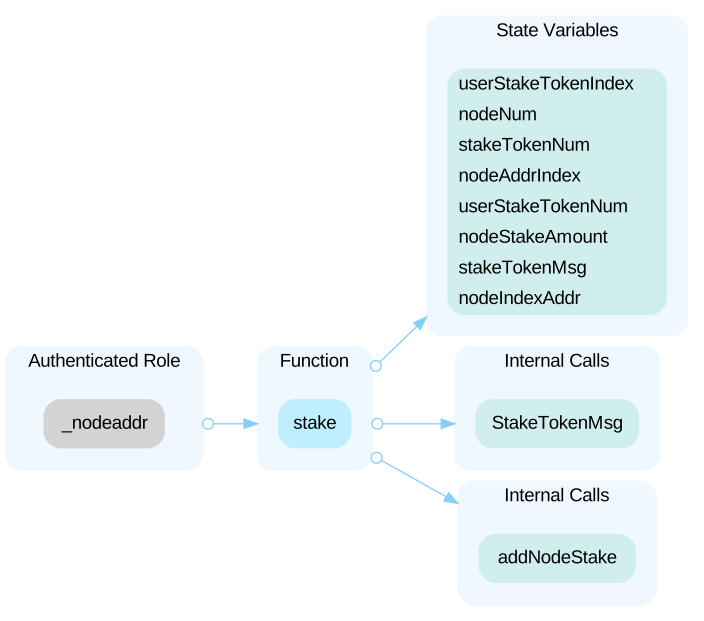 In the contract `Pledge` the role `_owner` has authority over the functions shown in the diagram below. Any compromise to the `_owner` account may allow the hacker to take advantage of this authority. - set `guarder`, `tokenSta` - update node information - add node information - delete node information 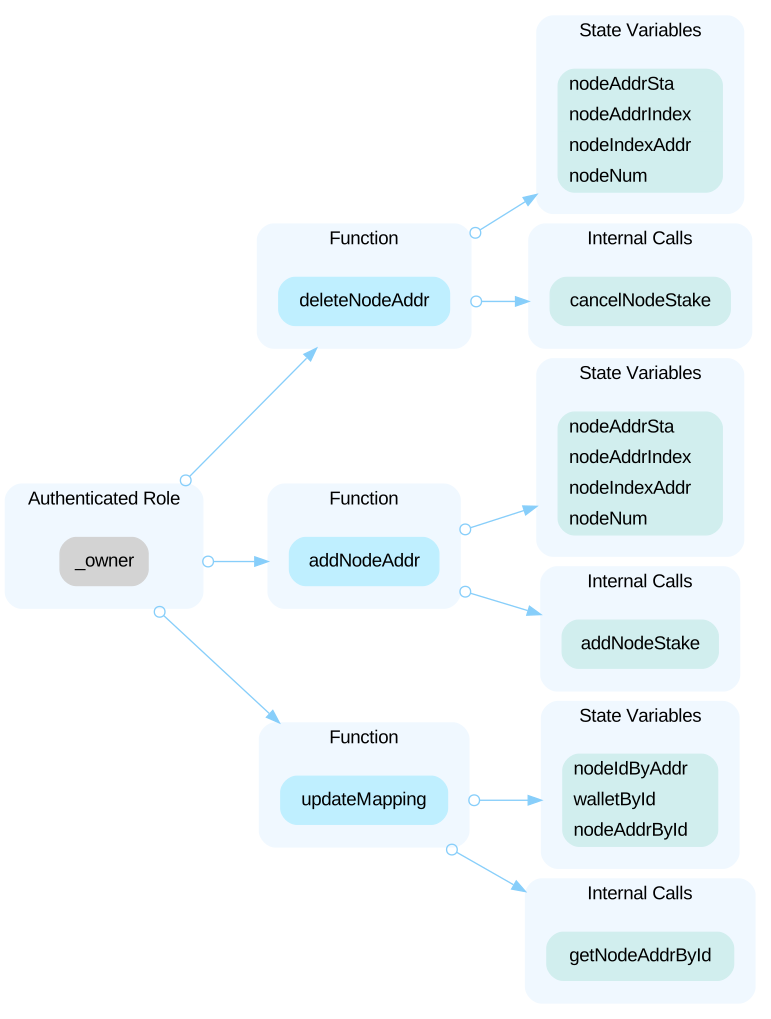 In the contract `Pledge` the role `guarder` has authority over the functions shown in the diagram below. Any compromise to the `guarder` account may allow the hacker to take advantage of this
HighCentralized Control of Contract UpgradeAcknowledged
All contracts in the project inherits upgradeable contracts, indicating that it is part of an upgradeable system. Upgradeable contracts often pair with a proxy contract that is responsible for managing contract upgrades. The `privileged roles` of the proxy often have the authority to update the implementation contract. Any compromise of the privileged account could allow a hacker to exploit this authority, potentially altering the implementation contract pointed to by the proxy and thus executing malicious functionality within the implementation contract.
MediumLack of Storage Gap in Upgradeable ContractAcknowledged
There is no storage gap preserved in the logic contract. The storage gap is essentially reserved space within a contract's storage layout. It's a placeholder for future variables that might be added in upgraded versions of the contract. The storage gap ensures that new variables added during upgrade do not overwrite existing storage variables, preserving the integrity of the contract's state. Any logic contract that acts as a base contract and which is inherited by other upgradeable contracts should have a reasonably sized storage gap preserved. In the audit scope, all contracts are upgradeable and derive from either the `Initializable`, `Ownable`, or `ERC20` super contract.
MediumPotential Locked TokenAcknowledged
The `refund()` function is designed to be called to return contract assets to users. when the function is invoked with an `amt` parameter less than the `paymentId`'s token amount, the remaining tokens are irretrievably locked in the contract because the function is callable only once with a specific `paymentId`. ```solidity=166 require(R.amount >= amt, "invalid amt"); ```
Contracts in scope
No deployed address is recorded for this audit.
The report names a repository or files. Open the report to see its scope.
Repository and files the report names (19)
- contracts/CommunityFund.sol
- contracts/FinanceToken.sol
- contracts/Pledge.sol
- contracts/FixedLock.sol
- contracts/Management.sol
- contracts/Conf.sol
- contracts/Payment.sol
- contracts/RewardPool.sol
- contracts/Snapshoot.sol
- contracts/proxy/proxy.sol
- contracts/Ledger.sol
- contracts/CrossChain.sol
- contracts/RewardContract.sol
- contracts/AccountManage.sol
- contracts/PriceService.sol
- contracts/TrainingTask.sol
- contracts/TechnologyFund.sol
- contracts/proxy/AccountManage_proxy.sol
- contracts/wrapToken.sol
Part of NetMind’s security record
 NetMind
Security firm
 CertiK
1,044 projects reviewed · 1,375 reports · latest May 2025
See CertiK’s auditsSomething wrong on this page? A missing report, a wrong date, a finding that was fixed since. Tell us and we check it against its source.
Tell us