OKX SDK
CertiK reviewed OKX (OKX SDK) on 19 May 2024: 5 findings, 0 critical; 3 marked fixed, 2 open.
Report hosted on skynet.certik.com.
Trustblock does not review code.
Findings5
Statuses are the security firm’s own, from its report.
| Severity | Open | Acknowledged | Fixed |
|---|---|---|---|
| Critical | 0 | 0 | 0 |
| High | 0 | 0 | 0 |
| Medium | 0 | 0 | 0 |
| Low | 2 | 0 | 3 |
LowHard-coded Secrets Found in SDK codeFixed
The okwallet-core component contains the AesEncrypt and AesDecrypt functions which use the encryption key that is hardcoded at `audit/okwallet-core/util/util.go:267`: ```GO var AesHardKey = common.MD5("1697773335922") // AesEncrypt AES 加密数据 func AesEncrypt(message, key string) (string, error) { if len(message) == 0 { return "", fmt.Errorf("message is empty") } if len(key) == 0 { key = AesHardKey } return common.Encrypt(message, key) } ``` No function calls towards these functions have been observed within the provided codebase. If this code snippet is not actively used, there are no security issues. **However, if this code is being used in other parts of the client’s software, this potentially poses a serious security problem.** ***Note:*** The reason this issue is undetermined is that we have only partial code. Although no reference to this hard coded secret was found in the code given to us, we can not conclude that code not shared with us did not use this hard-coded secret As such, the Severity is set as Informational, however it could be higher.
LowPotential Integer Overflow Risk in Data Handling.Fixed
We identified a snippet of code that could allow an integer overflow if a sufficiently large integer is cast as a `uint32`. The snippet of code is found here: `bitcoin/brc20/util.go:15` ```Go func ConvertToUint32(v string) uint32 { i, _ := strconv.Atoi(v) return uint32(i) } ``` ***Note:*** This function is actively used in the codebase but it is not possible to determine if there is a real risk of an integer overflow in the client’s codebase, as we cannot establish the runtime values of the provided parameters. As such, the Severity is set as Informational, however it could be higher.
LowRisky Implementation on Memory Free OperationFixed
In the iOS app, we identified a snippet of code that potentially could free previously allocated memory. No concret memory manipulation risks (UAF) were identified in the client’s source code. The memory being free here (ptr) could be already freed in other calls, and ptr is not set to NULL (which is not a must in free). 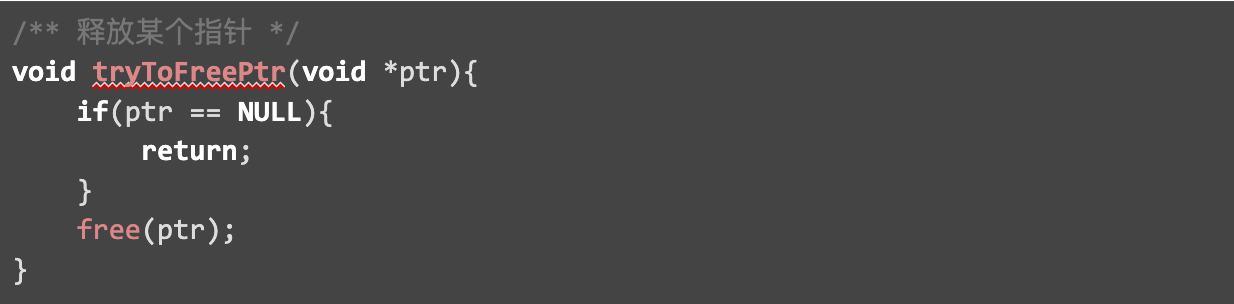
Contracts in scope
No deployed address is recorded for this audit.
The report names a repository or files. Open the report to see its scope.
Part of OKX’s security record
 OKX
Security firm
 CertiK
1,044 projects reviewed · 1,375 reports · latest May 2025
See CertiK’s auditsSomething wrong on this page? A missing report, a wrong date, a finding that was fixed since. Tell us and we check it against its source.
Tell us