
LIF3 audit reports
LIF3 has 3 public audit reports from CertiK and Hacken; the latest is CertiK, 27 Feb 2024; 1 critical finding, 1 acknowledged, not fixed. It also holds 1 deployed contract on 1 chain.
Last updated . It holds audits and findings, contracts and incidents up to Nov 2026. Trustblock does not review code.
Audits3
Newest first
| Report | Security firm | Date | Scope | Critical findings | Findings | Source |
|---|---|---|---|---|---|---|
| Lif3 L3USD | Security firm: CertiK | Date: | Scope: Not recorded; see the report | 1 critical acknowledged, not fixed | Findings: 1 critical · 4 low 1 acknowledged · 4 open | skynet.certik.com ↗ |
| Lif3 - vaults - SC | Security firm: CertiK | Date: | Scope: Files listed | None open | Findings: 2 high · 1 medium · 6 low 5 fixed · 2 acknowledged · 2 open | skynet.certik.com ↗ |
| Lif3 / ERC20 | Security firm: Hacken | Date: | Scope: 1 address on Fantom | None open | Findings: 1 low 1 fixed | hacken.io ↗ |
Findings15
15 findings in 3 reports: 6 fixed, 3 acknowledged (the team chose not to change the code), 6 open.
| Severity | Open | Acknowledged | Fixed |
|---|---|---|---|
| Critical | 0 | 1 | 0 |
| High | 0 | 2 | 0 |
| Medium | 0 | 0 | 1 |
| Low | 6 | 0 | 5 |
Not fixed (9)
CriticalAcknowledgedCentralization Related RisksLif3 L3USD · CertiK · 27 Feb 2024
In the contract `L3USD`, the role `minter` has authority over function `issue()`. Any compromise to any of the `minter` accounts may allow a hacker to take advantage of this authority and mint any amount of token to their wallet. In the contract `L3USD`, the role `owner` has authority over the following functions via these (abstract) contracts: - `transferOwnership()` - `pause()` - `unpause()` - `addBlackList()` - `removeBlackList()` - `destroyBlackFunds()` - `deprecate()` - `redeem()` - `addMinter()` - `removeMinter()` - `setParams()` Any compromise to the `owner` account may allow a hacker to take advantage of this authority and deprecate this contract, arbitrarily set minters, set fee rate and max fee, collect fees, disrupt normal token activities, and even remove all the token balance in any token holder.
Report ↗HighAcknowledgedCentralization Risks in LockingRewardPool.solLif3 - vaults - SC · CertiK · 9 Feb 2023
In the contract `LockingRewardPool` the role `DEFAULT_ADMIN_ROLE` has authority over the functions shown in the diagram below, as well as the privilege to assign/revoke all roles. Any compromise to the `DEFAULT_ADMIN_ROLE` account may allow the hacker to take advantage of this authority and arbitrarily set the lower limit of deposit amount, and assign/revoke privileged roles.  In the contract `LockingRewardPool` the role `RECOVERER_ROLE` has authority over the functions shown in the diagram below. Any compromise to the `RECOVERER_ROLE` account may allow the hacker to take advantage of this authority and withdraw any token that's not involved in the lock and reward process.  In the contract `LockingRewardPool` the role `REWARD_ADMIN_ROLE` has authority over the functions shown in the diagram below. Any compromise to the `REWARD_ADMIN_ROLE` account may allow the hacker to take advantage of this authority and add and update the reward tokens and related reward rate. Notice that changing the reward token decimal will result in the reset of current reward distribution. 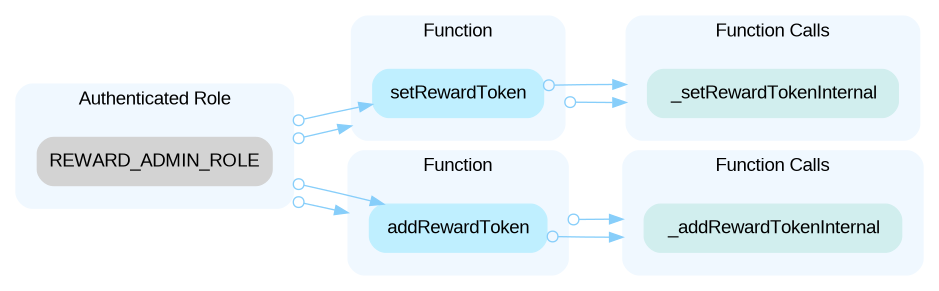 In the contract `LockingRewardPool` the role `TAX_ADMIN_ROLE` has authority over the functions shown in the diagram below. Any compromise to the `TAX_ADMIN_ROLE` account may allow the hacker to take advantage of this authority and arbitrarily set the fee rates and fee exemption. 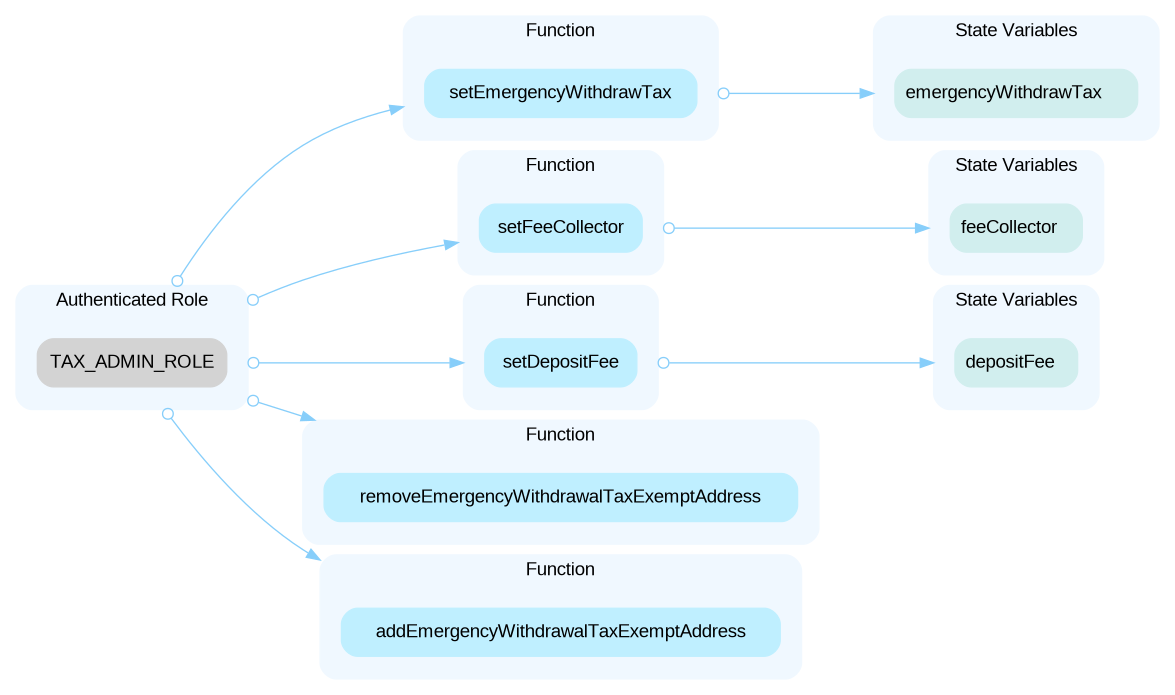
Report ↗HighAcknowledgedCentralization Risks in LockNFT.solLif3 - vaults - SC · CertiK · 9 Feb 2023
In the contract `LockNFT` the role `CREATOR_ROLE` has authority over the functions shown in the diagram below. Any compromise to the `CREATOR_ROLE` account may allow the hacker to take advantage of this authority and arbitrarily mint lock NFT. 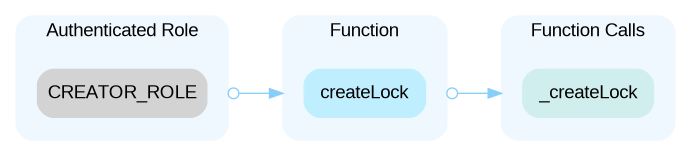 In the contract `LockNFT` the role `DESTROYER_ROLE` has authority over the functions shown in the diagram below. Any compromise to the `DESTROYER_ROLE` account may allow the hacker to take advantage of this authority and arbitrarily burn lock NFT. 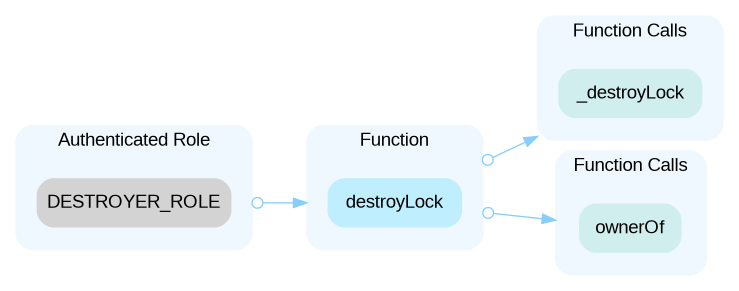 In addition, the role `DEFAULT_ADMIN_ROLE` has the authority to grant and renounce the `CREATOR_ROLE` and `DESTROYER_ROLE` roles, as provided by the inherited contract `AccessControl`. Any compromise to the `DESTROYER_ROLE` account may allow the hacker to take advantage of this authority and take over privileged role's management.
Report ↗LowOpenDoubtful TokenomicsLif3 L3USD · CertiK · 27 Feb 2024
Contract L3USD takes a less than 0.2% fee for each token transfer, and the fee is collected by the contract owner. If the fees is not flowed back to the users in some way, eventually all the L3USD token would end up in the contract owner's wallet.
Report ↗LowOpenMissing Emit EventsLif3 L3USD · CertiK · 27 Feb 2024
The following 2 functions changes important state variables but don't emit relevant events as notifications. 1. Function `transferOwnership()` updates contract owner address. 2. Function `transferFrom()` updates the allowance before token transfer.
Report ↗LowOpenMissing Zero Address ValidationLif3 L3USD · CertiK · 27 Feb 2024
The `_to` or `_spender` input address in function `approve()`, `transfer()` and `transferFrom()` are missing a check that it is not `address(0)`. This would allow users to send token to zero address and essentially burn their tokens and decrease the amount of L3USD in circulation.
Report ↗LowOpenVariable Can Be Declared as ImmutableLif3 L3USD · CertiK · 27 Feb 2024
The variables `name`, `symbol` and `decimals` assigned in the constructor can be declared as `Immutable`. Immutable state variables can be assigned during contract creation, but will remain constant throughout the lifetime of a deployed contract. An advantage of immutable variables is that reading them is significantly cheaper than reading from regular state variables since they are not located in storage.
Report ↗LowOpenSingle Point of Failure on Claiming RewardsLif3 - vaults - SC · CertiK · 9 Feb 2023
Function `_transferAllRewards()` calculates the reward amount for each reward token and transfers them to the caller. The *require* check on line 536 will revert the entire transaction if one of the reward token balance is not sufficient for the transfer. If the contract is short on one reward token, it could stop all users from claiming their rewards. ```solidity=532 for (uint256 rewardId = 0; rewardId < rewardsLength; ++rewardId) { address reward = rewards[rewardId]; uint256 userRewards = _calculateReward(startOfClaim, endOfClaim, lock.lockTime, lock.amount, reward); if (userRewards > 0) { require( IERC20(reward).balanceOf(address(this)) >= userRewards, "Too little rewards in contract to pay to user" ); address sender = msg.sender; IERC20(reward).safeTransfer(sender, userRewards); emit RewardPaid(sender, userRewards); } } ```
Report ↗LowOpenThird Party DependenciesLif3 - vaults - SC · CertiK · 9 Feb 2023
The contract is serving as the underlying entity to interact with third party deposit and reward token contracts, and prb math library. The scope of the audit treats 3rd party entities as black boxes and assumes their functional correctness. However, in the real world, 3rd parties can be compromised and this may lead to lost or stolen assets. Additionally, upgrades of 3rd parties can possibly create severe impacts, such as increasing fees of 3rd parties, migrating to addresses, etc.
Report ↗Contracts1
| Address | Chain |
|---|---|
| 0xbf60e7414ef09026733c1e7de72e7393888c64da | Chain: Fantom |
LIF3: questions
Is LIF3 audited?
Trustblock holds 3 public audit reports for LIF3, dated 31 Aug 2022 to 27 Feb 2024. The latest is by CertiK (“Lif3 L3USD”).
Who audited LIF3?
2 security firms wrote the reports Trustblock holds for LIF3: CertiK and Hacken.
Are there open findings in LIF3’s audits?
9 findings are still open or acknowledged in the firms’ reports: 1 critical, 2 high, 6 low (6 open, 3 acknowledged). Of 1 critical finding: 1 acknowledged, not fixed. Statuses are the security firms’ own.
Something wrong on this page? A missing report, a wrong date, a finding that was fixed since. Tell us and we check it against its source.
Tell us