Incident
Incident,
5M.
Source: De.Fi incident database.
- Audits before it
- 4.
- Audits since
- 63, the latest dated 13 Sep 2025.
As of 19 Nov 2026, Venus Protocol has 67 audit reports by 7 security firms on Trustblock; the latest is by Quantstamp, dated 13 Sep 2025. Those reports list no open critical findings. It also holds 2 deployed contracts on 2 chains and 2 incidents (latest 12 May 2022).
Record last updated . It holds audits and findings, contracts and incidents up to Nov 2026. Trustblock does not review code.
Newest first
67 audit reports, 40 in CertiK’s series, 11 in Quantstamp’s series
| Report | Security firm | Date | Scope | Critical findings | Source |
|---|---|---|---|---|---|
| Migration Core (Venus) | Security firm: Quantstamp | Date: | Scope: —Not recorded; see the report | None open | certificate.quantstamp.com ↗ |
| e-mode Core Pool (Venus) | Security firm: Quantstamp | Date: | Scope: —Not recorded; see the report | None open | certificate.quantstamp.com ↗ |
| Venus - WUSDMLiquidator | Security firm: CertiK | Date: | Scope: Repository at commit 0c7461c | None open | skynet.certik.com ↗ |
| Venus - asBNB Oracle | Security firm: CertiK | Date: | Scope: Repository at commit b88b277 | None open | skynet.certik.com ↗ |
| Venus - ZkETH Oracle | Security firm: CertiK | Date: | Scope: Files listed | None open | skynet.certik.com ↗ |
| Venus - RiskOracle Integration | Security firm: CertiK | Date: | Scope: Files listed | None open | skynet.certik.com ↗ |
| Venus - ERC4626Oracle | Security firm: CertiK | Date: | Scope: Files listed | None open | skynet.certik.com ↗ |
| Venus Protocol | Security firm: Cyberscope | Date: | Scope: 1 address on Ethereum | None open | cyberscope.io ↗ |
| Venus - PendleOracle Upgrade | Security firm: CertiK | Date: | Scope: Files listed | None open | skynet.certik.com ↗ |
| Venus - ACM Commands Aggregator | Security firm: CertiK | Date: | Scope: Files listed | None open | skynet.certik.com ↗ |
| Venus - Risk Fund Upgrade | Security firm: CertiK | Date: | Scope: Files listed | None open | skynet.certik.com ↗ |
| Venus - New Custom Oracle | Security firm: CertiK | Date: | Scope: Files listed | None open | skynet.certik.com ↗ |
| Venus - Two Kinks Interest Rate | Security firm: CertiK | Date: | Scope: Files listed | None open | skynet.certik.com ↗ |
| Venus Oracle | Security firm: Quantstamp | Date: | Scope: Repository at commit b24ef72 | None open | certificate.quantstamp.com ↗ |
| Venus - sfrxETH oracle adapter | Security firm: CertiK | Date: | Scope: Files listed | None open | skynet.certik.com ↗ |
| Venus - Mutichain Governance | Security firm: Quantstamp | Date: | Scope: Repository at commit 266ae02 | None open | certificate.quantstamp.com ↗ |
| Venus - VAI Controller Upgrade | Security firm: CertiK | Date: | Scope: Files listed | None open | skynet.certik.com ↗ |
| Venus - Mesh Architecture | Security firm: CertiK | Date: | Scope: —Not recorded; see the report | None open | skynet.certik.com ↗ |
| Venus - Correlated token oracles | Security firm: CertiK | Date: | Scope: Files listed | None open | skynet.certik.com ↗ |
| Venus - Correlated Oracles | Security firm: Quantstamp | Date: | Scope: Repository at commit 3e86e32 | None open | certificate.quantstamp.com ↗ |
| Venus - Unlist Market & Borrow Cap | Security firm: CertiK | Date: | Scope: Files listed | None open | skynet.certik.com ↗ |
| Venus - redeemAndUnwrap | Security firm: CertiK | Date: | Scope: Files listed | None open | skynet.certik.com ↗ |
| Time-Based Contracts (Venus) | Security firm: Quantstamp | Date: | Scope: Repository at commit 1a6cf0c | None open | certificate.quantstamp.com ↗ |
| Venus Protocol: Native Token Gateway | Security firm: Quantstamp | Date: | Scope: Repository at commit 9fe398b | None open | certificate.quantstamp.com ↗ |
| Venus - Native Token Gateway | Security firm: CertiK | Date: | Scope: Files listed | None open | skynet.certik.com ↗ |
Statuses are the security firm’s own, from each report.
| Severity | Open | Acknowledged | Fixed | Mitigated |
|---|---|---|---|---|
| Critical | 0 | 0 | 3 | 0 |
| High | 16 | 0 | 13 | 0 |
| Medium | 5 | 4 | 32 | 0 |
| Low | 51 | 39 | 203 | 9 |
Note that any centralization risks present in the existing codebase before the PR's in scope of this audit were not considered. Only those added to the in-scope PRs are addressed. We recommend all users carefully review the centralization risks, much of which can be found in our previous audits, which can be found here: [https://skynet.certik.com/projects/venus](https://skynet.certik.com/projects/venus). **MarketCapsRiskSteward** In the contract `MarketCapsRiskSteward`, the `DEFAULT_ADMIN_ROLE` of the `AccessControlManager` can grant addresses the privilege to call the function `setMaxDeltaBps()`. Any compromise to the `DEFAULT_ADMIN_ROLE` or accounts granted this privilege may allow the hacker to take advantage of this authority and set the max delta bps to a small non-zero value to prevent updates from process or to a large value to allow malicious updates to successfully process. --- In the contract `MarketCapsRiskSteward`, the `RISK_STEWARD_RECEIVER` has the privilege to call the function `processUpdate()`. Any compromise to the `RISK_STEWARD_RECEIVER` may allow the hacker to take advantage of this authority to process malicious supply and borrow cap updates. --- **RiskStewardReceiver** In the contract `MarketCapsRiskSteward`, the `DEFAULT_ADMIN_ROLE` of the `AccessControlManager` can grant addresses the privilege to call the following functions: - `pause()` - `unpause()` - `setRiskParameterConfig()` - `toggleConfigActive()` Any compromise to the `DEFAULT_ADMIN_ROLE` or accounts granted this privilege may allow the hacker to take advantage of this authority and do the following: - Pause the contract to cause a denial of service. - Unpause the contract to allow actions to be performed when they are not expected. - Set the risk parameter configuration for any update type, where they can set the `riskSteward` to any address and `debounce` to any non-zero value. This could be used to bypass important checks and to allow updates to be processed in quick succession. - Toggle a configuration for an update type. This can cause a denial of service if it is toggled off unexpectedly or allow an unintended configuration to be used if it is toggled on. --- In addition, some of the aliased functions in the adjustment to the core comptroller were privileged functions. The entities that have access to the original privileged function also have access to the aliased privileged function. However, as the functions are simply aliases, they hold the same power.
Open the reportThe contracts `MarketCapsRiskSteward` and `RiskStewardReceiver` are upgradeable; the corresponding `admin` role in each respective proxy has the authority to update the implementation contract behind each contract. Any compromise to the `admin` account in each proxy may allow a hacker to take advantage of this authority and change the implementation contract the proxy points to, and therefore execute potential malicious functionality in the implementation contract.
Open the reportNote that any centralization risks present in the existing codebase before the PR's in scope of this audit were not considered. Only those added to the in-scope PRs are addressed. We recommend all users carefully review the centralization risks, much of which can be found in our previous audits, which can be found here: [https://skynet.certik.com/projects/venus](https://skynet.certik.com/projects/venus). In the contract `RiskFundV2` the `DEFAULT_ADMIN_ROLE` of the `AccessControlManager` can grant addresses the privilege to call the function `sweepTokenFromPool()`. Any compromise to the `DEFAULT_ADMIN_ROLE` or accounts granted this privilege may allow the hacker to take advantage of this authority and remove any amount of any token from the contract, sending it to an address they control.
Open the reportIn the contract `SFrxETHOracle`, the role `DEFAULT_ADMIN_ROLE` of the `AccessControlManager` can grant addresses the privilege to call the following functions: - `setMaxAllowedPriceDifference()` Any compromise to the `DEFAULT_ADMIN_ROLE` or accounts granted this privilege may allow a hacker to take advantage of this authority and do the following: - Increase or decrease the allowed price difference to cause a denial of service or enable larger price fluctuations.
Open the report`SFrxETHOracle` is an upgradeable contract, the owner can upgrade the contracts at any time. If an attacker compromises the owner, they can change the implementation of the contract to return any price they wish for the asset to steal funds from the protocol.
Open the reportIn the contract `NativeTokenGateway` the role `_owner` has authority over the functions shown in the diagram below. Any compromise to the `_owner` account may allow the hacker to take advantage of this authority and remove the entire balance of native token or any ERC20 token from the contract and send it to their own address. It is noted that the contract is not intended to hold tokens in normal cases. 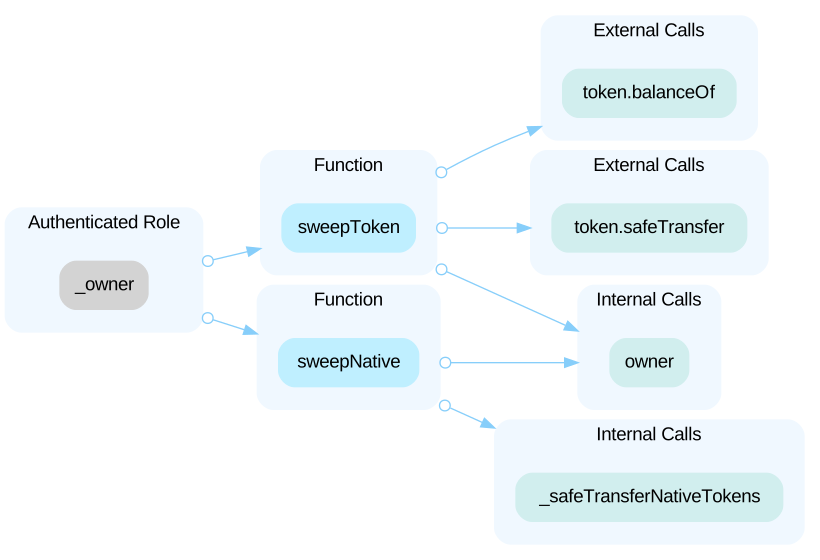
Open the report### TimelockV8 In the contract `TimelockV8` the role `admin` has authority over the functions shown in the diagram below. Any compromise to the `admin` account may allow the hacker to take advantage of this authority and do the following: - Queue a malicious transaction. - Cancel a transaction causing it to have to be queued again. - Execute a transaction when it was not intended to be or execute a malicious transaction they had previously queued. 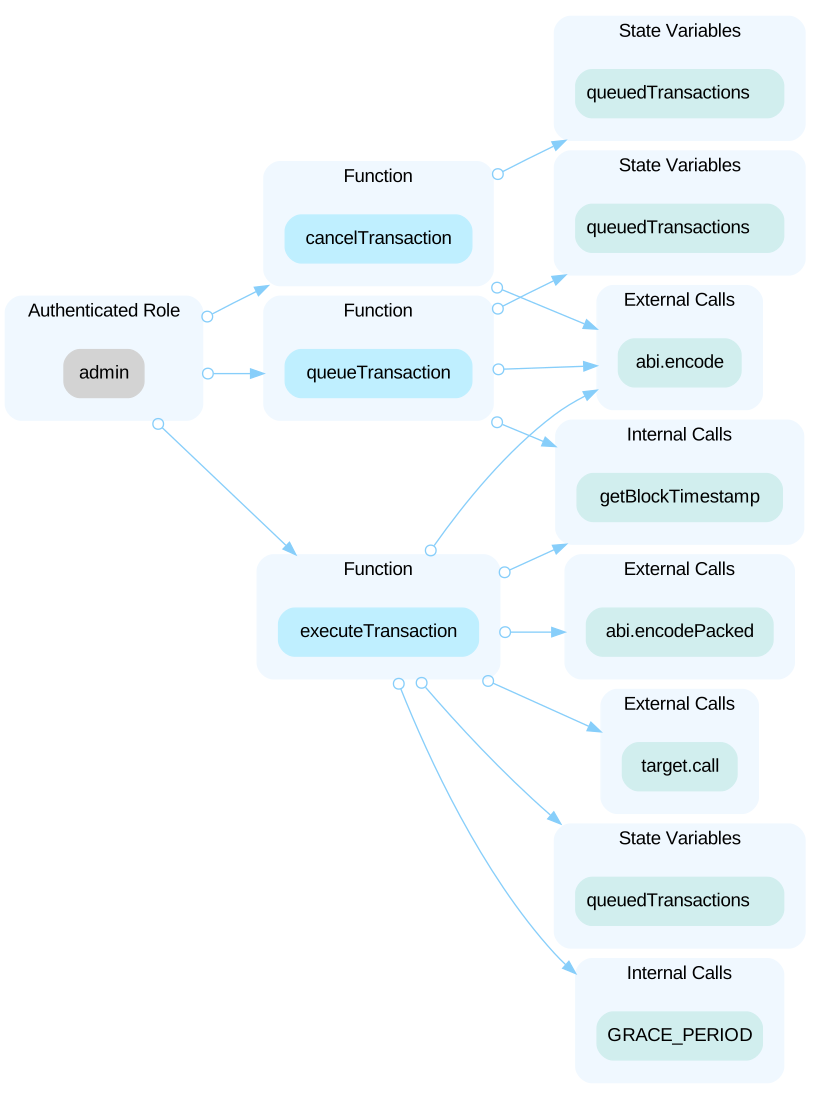 In addition to this, they also have control over the following functions which can only be called by queueing a transaction that will call them and then executing that transaction: - `setDelay()` - `setPendingAdmin()` Any compromise to the `admin` account may allow a hacker to queue and then execute a transaction that will change the delay between the MINIMUM_DELAY and MAXIMUM_DELAY. It will also allow them to set the pending admin to an account they control, which can then call `acceptAdmin()` so that the team cannot recover the role from the hacker. --- ### BaseOmnichainControllerSrc In the contract `BaseOmnichainControllerSrc` the `DEFAULT_ADMIN_ROLE` of the `AccessControlManager` can grant addresses the privilege to call the following functions: - `setMaxDailyLimit()` - `pause()` - `unpause()` Any compromise to the `DEFAULT_ADMIN_ROLE` or accounts granted this privilege may allow the hacker to take advantage of this authority and do the following: - Update the max daily receive limit to 0 in order to prevent sending any proposals, or set it to a high value to allow more proposals to be sent than intended. - Pause or unpause the contract during a crucial period. --- In the contract `BaseOmnichainControllerSrc`, the role `_owner` has authority over the following functions: - `setAccessControlManager()` Any compromise to the `_owner` account may allow a hacker to take advantage of this authority and update the `accessControlManager` address to a malicious contract and gain control over setting the privilege of the functions above. --- ### BaseOmnichainControllerDest In the contract BaseOmnichainControllerDest, the role `_owner` has authority over the following functions: - `setMaxDailyReceiveLimit()`; - `pause()`; - `unpause()`; Any compromise to the `_owner` account may allow a hacker to take advantage of this authority and - Update the max daily receive limit to 0 in order to prevent receiving any proposals, or set it to a high value to allow more proposals to be accepted than intended. - Pause or unpause the contract during a crucial period. --- ### OmnichainExecutorOwner In the contract `OmnichainExecutorOwner` the role `_owner` has authority over the following functions: - `upsertSignature()` Any compromise to the `_owner` account may allow the hacker to take advantage of this authority and make a function signature active within the `functionRegistry` mapping in order to give their account access to this Omnichain Governance logic through the privilege outlined below. --- In the contract `OmnichainExecutorOwner` the role `DEFAULT_ADMIN_ROLE` of the `AccessControlManager` can grant addresses the privilege to call the following functions: - Functions within the Omnichain Governance via the `fallback()` function in `OmnichainExecutorOwner` - `transferBridgeOwnership()` Any compromise to the `DEFAULT_ADMIN_ROLE` or accounts granted this privilege may allow the hacker to take advantage of this authority and do the following: - Call privileged functions that the `OmnichainExecutorOwner` controls within the Omnichain Governance. - Give an account they control the owner privilege of the bridge in order to access other functions so they can take steps to perform the above. --- ### OmnichainProposalSender In the contract `OmnichainProposalSender` the role `_owner` has authority over the following functions: - `fallbackWithdraw()` Any compromise to the `_owner` account may allow the hacker to take advantage of this authority and clear a message that was intended to be retried and recover the `msg.value` for themselves. --- In the contract `OmnichainProposalSender` the role `DEFAULT_ADMIN_ROLE` of the `AccessControlManager` can grant addresses the privilege to call the following functions: - `execute()` - `setTrustedRemoteAddress()` - `setConfig()` - `setSendVersion()` - `updateValidChainId()` Any compromise to the `DEFAULT_ADMIN_ROLE` or accounts granted this privilege may allow the hacker to take advantage of this authority and do the following: - Submit a malicious proposal and send it to the remote chain so that it can be executed there. - Change the remote message receiver address to cause a denial of service or to execute malicious functionality. - Change the configuration of the LayerZero messaging library to cause a denial of service. - Update the list of valid chain Id
### BaseXVSProxyOFT In the contract `BaseXVSProxyOFT` the role `_owner` has authority over the functions shown in the diagram below. Any compromise to the `_owner` account may allow the hacker to take advantage of this authority and - Set the oracle to an address that does not provide accurate pricing information. - Pause or unpause the movement of tokens through the contract at critical periods. - Set the max daily limit, the max daily receive limit, the max single transaction limit, and the max single receive transaction limit to values that either are advantageous to the hacker moving funds across chains, or the hacker may set these values to 0 to prevent users from moving funds out of a vulnerable environment. - Set an address they control to be whitelisted and circumvent the bridged amount checks. - Set or remove the trusted remote address, either allowing a malicious remote address or denying service to a trusted remote address. - Remove tokens that correspond to the `outboundAmount` without updating the `outboundAmount`, creating a discrepancy where it appears more tokens are locked in the source bridge than actually are. - Enable or disable the use of `sendAndCall()`. 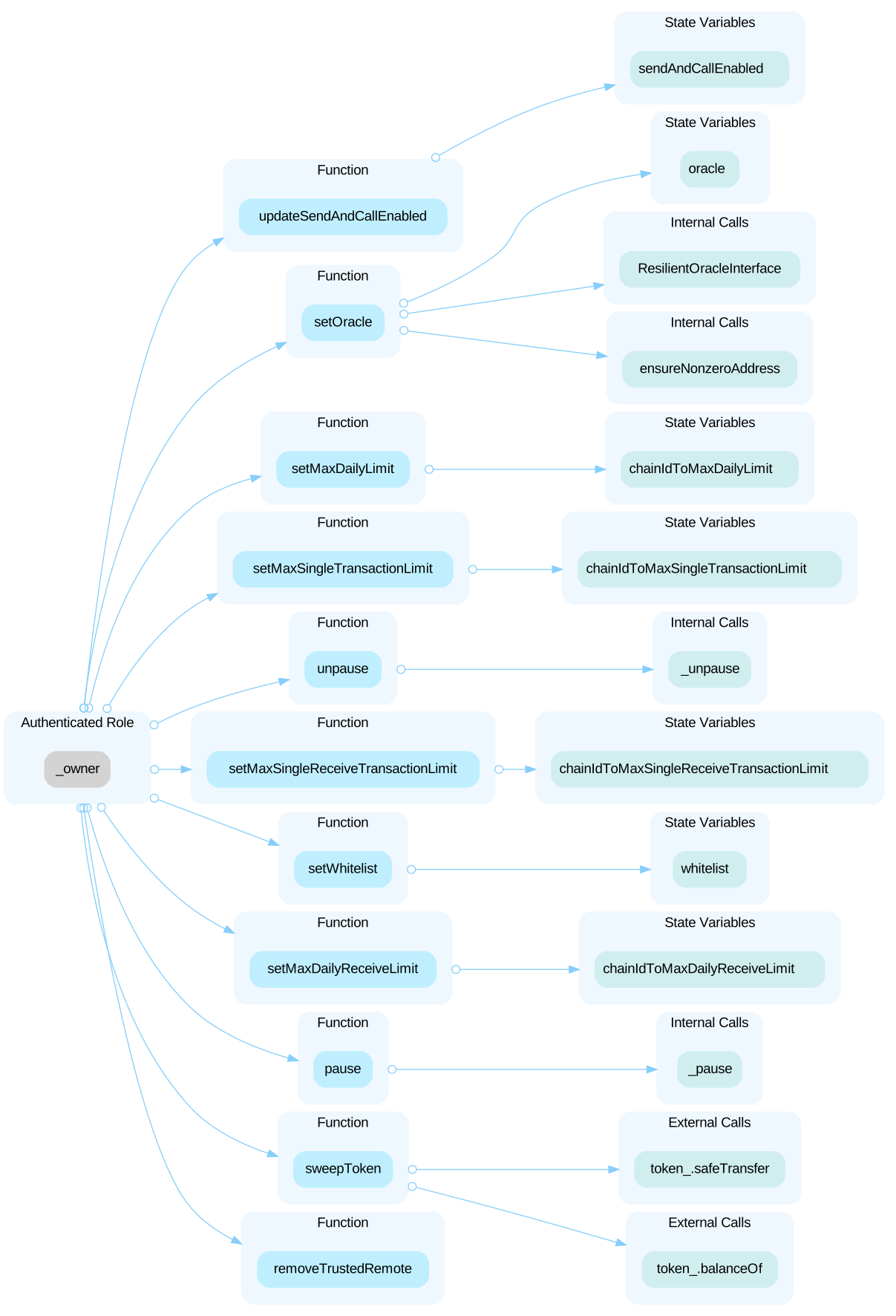 --- ### XVSBridgeAdmin In the contract `XVSBridgeAdmin` the role `_owner` has authority over the functions shown in the diagram below. Any compromise to the `_owner` account may allow the hacker to take advantage of this authority and make a function signature active within the `functionRegistry` mapping in order to give their account access to this bridge logic through the privilege outlined below. 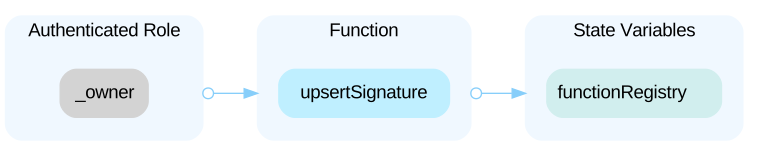 In the contract `XVSBridgeAdmin` the role `DEFAULT_ADMIN_ROLE` of the `AccessControlManager` can grant addresses the privilege to call the following functions: - Functions within the XVS Bridge via the `fallback()` function in `XVSBridgeAdmin` - `setTrustedRemoteAddress()` - `transferBridgeOwnership()` Any compromise to the `DEFAULT_ADMIN_ROLE` or accounts granted this privilege may allow the hacker to take advantage of this authority and do the following: - Call privileged functions that the `XVSBridgeAdmin` controls within the XVS Bridge, potentially allowing the hacker to steal funds locked in the bridge or using the bridge minting privilege to steal funds from a pool on one of the bridged chains. - Add a malicious trusted remote contract address in order to take steps to do the above. - Give an account they access the owner privilege of the bridge in order to access other functions so they can take steps to perform the above. --- ### XVSProxyOFTDest In the contract `XVSProxyOFTDest` the role `_owner` has authority over the functions shown in the diagram below. Any compromise to the `_owner` account may allow the hacker to take advantage of this authority and - Remove a failed message from the system so that it cannot be retried. 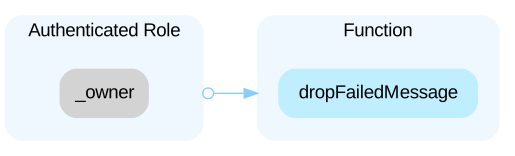 --- ### XVSProxyOFTSrc In the contract `XVSProxyOFTSrc` the role `_owner` has authority over the functions shown in the diagram below. Any compromise to the `_owner` account may allow the hacker to take advantage of this authority and - Remove a failed message from the system so that it cannot be retried. - Remove any amount of XVS funds currently held by the contract. - Use the function to inaccurately update the `outboundAmount` through a combination of calls to `sweepToken()` and `fallbackDeposit()`. This may cause a discrepancy where the `outboundAmount` is far larger than the balance the contract actually holds. 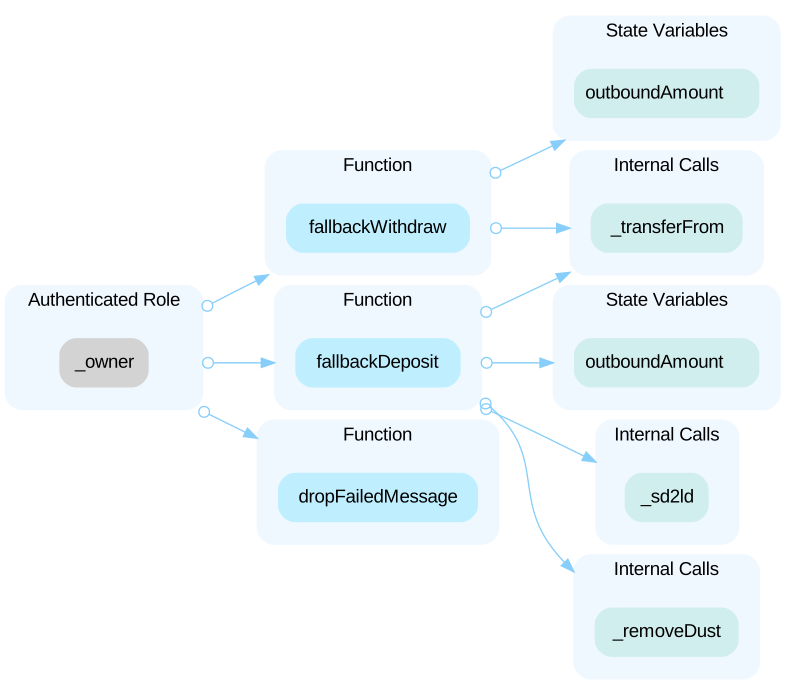 --- ### TokenController In the contract `TokenController` the role `_owner` has authority over the functions shown in the diagram below. Any compromise to the `_owner` account may allow the hacker to take advantage of this authority and set the `accessControlManager` to an address they control so that they can make updates via the functions outlined below. 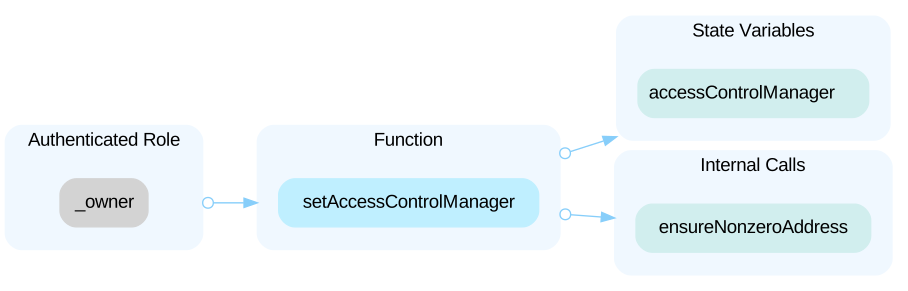 In the contract `TokenController`, the role `DEFAULT_ADMIN_ROLE` of the `AccessControlManager` can grant addresses the privilege to call the following functions: - `pause()` - `unpause()` - `updateBlacklist()` - `setMintCap()` - `migrateMinterTokens()` Any compromise to the `DEFAULT_ADMIN_ROLE` or accounts granted this privilege may al
### PegStability.sol In the contract `PegStability` the `DEFAULT_ADMIN_ROLE` can grant access to the following functions: - `pause()` - `resume()` - `setFeeIn()` - `setFeeOut()` - `setVaiMintCap()` - `setVenusTreasury()` - `setComptroller()` Any compromise to the `DEFAULT_ADMIN_ROLE` or access to the functions may allow a hacker to do the following - Pause the contract preventing anyone from swapping. - Resume the contract, which may allow swaps to occur when the should not be allowed. - Set the fees in BIPs to any percentage less than 100%. - Set the `vaiMintCap` to any value, allowing any amount of VAI to be minted or if the value is set to 0 to prevent anyone swapping stable token to VAI. - Set the treasury to a wallet they control to collect the fees for themselves. - Set the comptroller address to a malicious contract that will return the address of a malicious oracle to provide inaccurate prices for the stable token.
In the contract `Liquidator` the role `_owner` has authority over the functions shown in the diagram below. Any compromise to the `_owner` account may allow the hacker to take advantage of this authority and change the `_accessControlManager` which can allow them to give any of the privledges outline below or the `protocolShareReserve` to collect the protocols share for themselves. 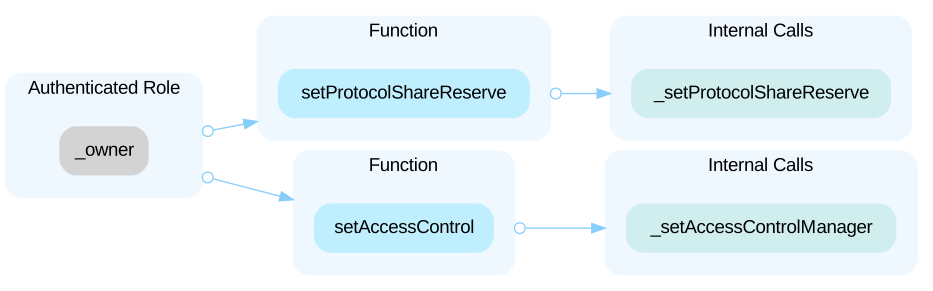 --- In the contract `Liquidator`, the `_accessContolManager` contract can give privilege to the following functions: - `restrictLiquidation()`, which can be used to prevent a borrower from being liquidated by having no liquidators on their allowlist. - `unrestrictLiquidation()`, which can be used to allow a non-allowlisted user to liquidate an account. - `addToAllowlist()`, which can allow any address to liquidate an account. - `removeFromAllowlist()`, which can remove an liquidators ability to liquidate an account. If all liquidators are removed from a borrowers allowlist this will make it so they cannot be liquidated. - `setTreasuryPercent()`, which can be set so that the protocol share reserve receives none of the liquidation incentive. Or it can be set so that it receives all of the liquidation incentive. - `setMinLiquidatableVAI()`, which can be set to a small value so that a liquidator would always need to liquidate VAI before they could liquidate any other borrows. - `setPendingRedeemChunkLength()`, which can be set to a large value and cause a denial of service if the `pendingRedeem` array is too large. Or set to zero to prevent any tokens pending redemption from being redeemed. - `pauseForceVAILiquidate()`, which can be used to not have to liquidate VAI borrows before others. - `resumeForceVAILiquidate()`, which can be used to ensure that VAI borrows are liquidated before any others.
In the contract `SwapRouter` the role `WBNB` has authority to send `BNB` to the contract. If it is set to a malicious contract, then it can allow an attacker to send `BNB` to the contract. This is an immutable variable and `WBNB` is not an upgradeable contract, so this only needs to be checked once after deployment to be the correct address. In the contract `SwapRouter` the role `_owner` has authority over the functions shown in the diagram below. Any compromise to the `_owner` account may allow the hacker to take advantage of this authority and do the following: - transfer any tokens held by the contract to any other address; - set the `vBNBAddress` to any other listed `vToken`, which would revert or if the comptroller is compromised could be set to a malicious contract. 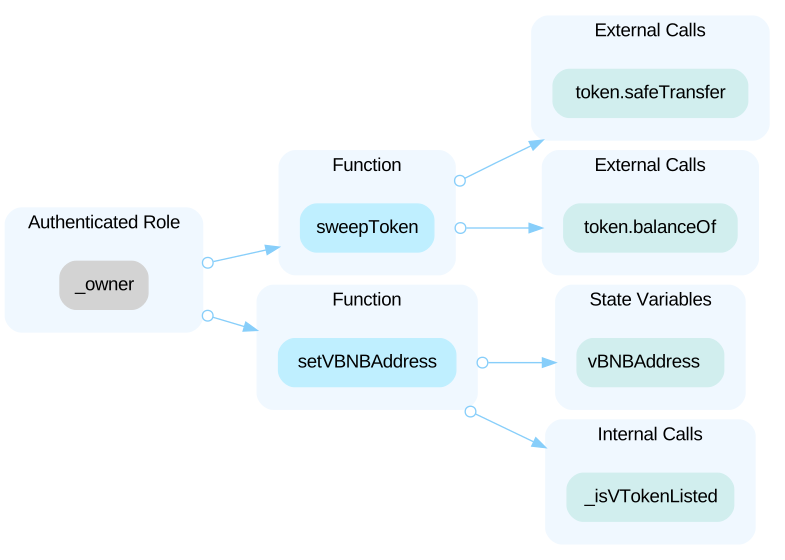
The contract `OmnichainExecutorOwner` is upgradeable; the corresponding `admin` role in each respective proxy has the authority to update the implementation contract behind each contract. Any compromise to the `admin` account in each proxy may allow a hacker to take advantage of this authority and change the implementation contract the proxy points to, and therefore execute potential malicious functionality in the implementation contract.
`Liquidator.sol` is an upgradeable contract. The owner can upgrade the contract without the community's commitment. If an attacker compromises the account, he can change the implementation of the contract and drain tokens from the contract.
`PegStability` is an upgradeable contract. The owner can upgrade the contract without the community's commitment. If an attacker compromises the account, they can change the implementation of the contract and drain tokens from the contract.
The report gives no description here.
The report gives no description here.
The report gives no description here.
The report gives no description here.
The report gives no description here.
The report gives no description here.
The report gives no description here.
**RiskStewardReceiver** - `constructor()` and `initialize()` do not have NatSpec comments. - The NatSpec comments for `setRiskParameterConfig()` do not include the `riskSteward` parameter, the event emitted, or the potential errors. - The NatSpec comments for `toggleConfigActive()` do not include the access control, events, or errors. - The NatSpec comments for `processUpdateById()` include the errors `UpdateNotInRange` and `UnsupportedUpdateType`. However, these errors are emitted by the `riskSteward` contract being called and may not always be emitted if new `riskStewards` are utilized. - The NatSpec comments for `processUpdateByParameterAndMarket()` do not include the events or errors. - The functions `_processUpdate()`, `_getMarketUpdateTypeKey()`, and `_validateUpdateStatus()` do not have NatSpec comments. **MarketCapsRiskSteward** - `constructor()` and `initialize()` do not have NatSpec comments. - The NatSpec comments for `setMaxDeltaBps()` do not include the event. - The NatSpec comments for `processUpdate()` do not include the potential events it may emit. - The NatSpec comments for `_updateWithinAllowedRange()` do not include the error. - The functions `_updateSupplyCaps()`, `_updateBorrowCaps()`, `_processSupplyCapUpdate()`, `_processBorrowCapUpdate()`, `_validateSupplyCapUpdate()`, `_validateBorrowCapUpdate()`, and `_decodeBytesToUint256()` are missing NatSpec comments. We assume that all functions should include NatSpec comments. which should include a description of the function, parameters, return values, errors, events, and access control. Please let us know if any if there is another convention you are following in terms of what NatSpec comments will be included for each function. **PolicyFacet** - The NatSpec comments for the function `getBorrowingPower()` do not include the return values. **SetterFacet** - The NatSpec comments for the function `setPrimeToken()` do not include the return value. - The NatSpec comments for the parameter `vTokens` of the function `setMarketSupplyCaps()` reference changing borrow caps, when it should reference changing supply caps. - The functions `__setPriceOracle()`, `__setCloseFactor()`, `__setCollateralFactor()`, `__setLiquidationIncentive()`, `__setMarketBorrowCaps()`, `__setMarketSupplyCaps()`, `__setPrimeToken()`, `__setForcedLiquidation()`, and `__setActionsPaused()` do not have NatSpec comments.
Open the reportIf the changes in scope of this audit are made to update the Core Comptroller Interface to be compatible with the Isolated Pools Interface prior to deploying the risk steward contracts, then the `IIsolatedPoolsComptroller` interface can be used for all comptrollers allowing the cited logic to be simplified.
Open the reportSome ERC4626 implementations, such as [OpenZeppelin's](https://github.com/OpenZeppelin/openzeppelin-contracts/blob/master/contracts/token/ERC20/extensions/ERC4626.sol), may have more than 18 decimals. For example, if the OZ implementation is used on an asset that has 18 decimals and the decimal offset is chosen to be 1, then the ERC4626 token will have 19 decimals. (See [here](https://github.com/OpenZeppelin/openzeppelin-contracts/blob/441dc141ac99622de7e535fa75dfc74af939019c/contracts/token/ERC20/extensions/ERC4626.sol#L99C5-L108C6)). There are assumptions made throughout the codebase that the decimals of tokens are less than or equal to 18. If such an ERC4626 token is to be supported, we recommend carefully reviewing to ensure that it does not cause any potential issues within the protocol.
Open the reportThe `correlatedToken` is assumed to be an ERC4626 vault, and the input `underlyingToken` must be the asset of the vault. However, it is not checked that the asset of the vault is the input `underlyingToken`. If the incorrect `underlyingToken` is chosen, it will result in an incorrect underlying amount returned and thus will result in inaccurate pricing.
Open the reportThe `ERC4626Oracle` contract relies on the security of the underlying ERC-4626 implementation and the behavior of the `convertToAssets()` function. The following specifications should be ensured for every ERC4626 token that is to be supported with this oracle. - It **must** comply with the [ERC-4626](https://eips.ethereum.org/EIPS/eip-4626) specification. - It **should** have been audited and is free from share manipulation vulnerabilities. In particular direct or stealth donation attack vectors should be properly mitigated. - It **should** be non-upgradeable or if it is upgradeable the upgrade authority should be well trusted and carefully monitored. - It **should not** incorporate fees, otherwise, `convertToAssets()` may return an inflated share price as it does not account for the fees charged. - It **should not** incorporate custom logic, such as delayed withdrawals or other constraints that can affect share value. Such mechanisms result in the share value being less than the amount of assets they can be redeemed for due to the delay and available liquidity. Vaults using other custom logic should be considered on a case by case basis to ensure proper integration. - It **should not** include flash loan functionality. If the vault allows flash loans, then during the flash loan the vaults balance will decrease and may manipulate the return value of `convertToAssets()`. - It **should be** highly liquid to ensure negligible slippage when converting shares to assets and vice versa. Otherwise, `convertToAssets()` may be inflated.
Open the reportThe report gives no description here.
Open the reportThe report gives no description here.
Open the reportThe report gives no description here.
Open the reportThe report gives no description here.
Open the reportThe report gives no description here.
Open the reportThe report gives no description here.
Open the reportThe report gives no description here.
Open the reportThe report gives no description here.
Open the reportThe report gives no description here.
Open the reportThe function `_getUnderlyingAmount()` returns the amount of `underlyingToken` for 1 pendle token. If `RATE_KIND = PT_TO_SY`, then it returns the amount of SY for 1 pendle token, so that in this case the `underlyingToken` should be the SY token. Alternatively, if `RATE_KIND = PT_TO_ASSET`, then it returns the amount of underlying asset for 1 pendle token, so that in this case the `underlyingToken` should be underlying asset. However, there are no checks in the `constructor()` ensuring that the correct `underlyingToken` is chosen for the input `rateKind`. If these inputs are not consistent, then the oracle will return an incorrect price.
Open the reportVenus describes the intended use of this contract with their AccessControlManager as follows: 1. Preload permissions to be granted or revoked in the `AccessControlManager`. 2. Make a VIP on BNB Chain for three commands executed on the corresponding remote network. The three commands are: - Grant the `DEFAULT_ADMIN_ROLE` in the `AccessControlManager` to the `ACMCommandsAggregator`. - Execute functions `executeGrantPermissions()` or `executeRevokePermissions()` with chosen preloaded permission id as needed to grant or revoke the preloaded permissions within the `AccessControlManager`. - Revoke `DEFAULT_ADMIN_ROLE` from the `ACMCommandsAggregator`. The sequence of commands done in step 2 must be performed atomically within the same transaction. Otherwise, the protocol stands the risk of anyone granting or revoking permissions within the `AccessControlManager` within any of the remote chains. This is because all functions within the `ACMCommandsAggregator` are left permissionless. In addition, the permissions associated with the `index` provided must be carefully reviewed prior to the execution of the VIP to ensure that the proper permissions are granted/revoked. In particular, it should be ensured that the `index` is not referencing permissions that were added by unintended entities.
Open the reportThe two kink interest rate model gets the borrow rate as a piecewise linear function whose boundary points are given by kink1 and kink2. The provided documentation provided two models, one of which only included linear curves with positive slope, and the second that only allowed for a linear curve with negative slope between kink1 and kink2. However, the implementation makes no checks on any of the multipliers, so that all three linear curves of the piecewise function are allowed to have negative slope. While it may be desired to have negative slope linear curves in the intervals [0, kink1] and [kink1,kink2], the interval [kink2,1e18] has the highest utilization rates and should incentivize users to payback their borrows by having a higher borrow rate. As such the slope for the linear function in this interval should be positive to increase the borrow rates as the utilization rate closely approaches 100 percent. In addition, the utilization of negative multipliers requires the addition of some checks and castings which increase gas costs slightly. As such it may be beneficial to create two separate rate models as in the documentation. One that only allows for positive multipliers and the other which allows for desired negative multipliers. Last, it should be noted that in the case where `max(0, output)` is 0, where `output` represents one of three formulae depending on the subinterval, this may present an extra kink in the interest rate model, via a horizontal slope, until the `output` value is again positive. In this way, there may be more than two kinks in the interest rate model.
Open the reportThe `maxAllowedPriceDifference` is designed to revert cases when the difference of the two prices returned via the `SfrxEthUsdDualOracle` are greater than it. This helps mitigate issues if one oracle was to be compromised and return the wrong price. However, this value must be chosen high enough that it will not cause a denial of service due to natural discrepancies between the two oracles prices and low enough that it will not allow for a significant manipulated price to be returned.
Open the reportIn the functions `mintVAI()` and `repayVAIFresh()`, the use of functions `addUint`, `subUint`, `mulUint`, and `divUint` was replaced by functions `add_`, `sub_`, `mul_` and `div_` respectively. The main difference is that the previous set of functions returned an error which was either used to revert the transaction and return a specific string message describing where the calculation failed or emit a `Failure` event. The updated version will revert with a generic overflow, underflow, or divide by zero string error. This is done only in the functions `mintVAI()` and `repayVAIFresh()`, with the remaining instances of `addUint`, `subUint`, `mulUint`, and `divUint` in the contract unchanged.
Open the reportThe mapping `chainIdToMaxDailyLimit[dstChainId_]`, is designed to limit the maximum amount of XVS that can be bridged from the current chain to the chain with `dstChainId_` in a 24 hour period. Similarly, `chainIdToMaxDailyReceiveLimit[srcChainId_]` is designed to limit the maximum amount of XVS that can be bridged to the current chain from the chain with `srcChainId_` in a 24 hour period. However, as there are now multiple paths between bridges, it is possible to bridge more than this amount. As such, this value represents the maximum amount that can be directly bridged, however, the actual amount that can be bridged is the sum of the maximum amounts that can bridged along all paths.
Open the reportIf multiple rewards distributors are allowed for the same token, this may cause the `rewardsDistributors` array to grow excessively large. As the hooks iterate through the entire `rewardsDistributors` array, this may cost a significant amount of gas to be used unnecessarily. In addition, if enough `rewardsDistributors` are added, then this will cause the max loops to need to be adjusted, which may cause issues with other loops that are not dependent on the size of the `rewardsDistributors` array.
The function `_blockingLzReceive()` was overridden to include the `whenNotPaused` modifier. However, if the protocol is paused, then it will cause the transaction to revert without storing the failed message. If it is intended to not store any messages when paused, then the `whenNotPaused` modifier can be moved to an overrided external facing `lzReceive()` function so that it reverts sooner. Alternatively if messages should be stored when paused, then the `whenNotPaused` modifer can be moved to the `_nonblockingLzReceive()` function. However, if this is done a method should be added allowing failed messages to be canceled before unpausing in case malicious failed messages are stored and could be retried. Also we recommend considering adding a method to cancel stored failed messages, because if a malicious proposal is stored as a failed message and then is retried successfully. Canceling each individual transaction could be much more intensive than canceling the failed messages proposal.
The report gives no description here.
The VAI vault's `pendingXVS()` function may not return the correct amount of XVS rewards the user is eligible for. This function uses `accXVSPerShare` to calculate the rewards, but `accXVSPerShare` is only updated in `updateVault()`. Therefore, the return of `pendingXVS()` is inaccurate between a `updatePendingRewards()` call and the first call that triggers `updateVault()`. Third-party protocols or front-ends calling `pendingXVS()` during this period will get a lower value than the actual.
The structure of the codebase does not conform to the official Solidity style guide of `v0.5.16` . The style guide can be found at https://docs.soliditylang.org/en/v0.5.16/style-guide.html#orde r-of-functions.
The structure of the codebase does not conform to the official Solidity style guide of v0.5.16 . The style guide can be found at https://docs.soliditylang.org/en/v0.5.16/style-guide.html#orde r-of-functions.
The mapping declarations on the aforementioned lines have `vToken` address as their keys and all of these mapping can be converted into a single mapping where the value will be of struct type. This will greatly reduce the lookup gas costs associated with multiple mappings.
The mappings declarations on the aforementioned lines have `user address` as their keys. These mappings can be converted into a single mapping having value of struct type.
The properties of struct Market on the aforementioned lines laid out within the struct ineffeciently where they are taking a full 32-bytes in storage in space.
The storage variables on the aforementioned are inefficiently laid out in the storage of the contract.
The comparison on the aforementioned line is inefficient as the length of `accountAssets[borrower].length` can never grow beyond maxAssets and hence the comparison can be changed from `accountAssets[borrower].length >= maxAssets` to `accountAssets[borrower].length == maxAssets` which is gas efficient.
The functions on the aforementioned lines perform the same functionalities with one providing public interface while the other one has internal visibility.
The function on the aforementioned line loops through holders twice which is inefficient and the code can be rectified to loop through holders only once.
The report gives no description here.
If the mapping `proposalTimelocks` is updated to a fixed-length array, deployment cost and the cost to call function `addTimelocks()` will increase slightly, but the calls to functions `execute()` and `cancel()` will decrease in gas cost.
### OmnichainGovernanceExecutor.sol - The constructor is missing a check that `guardian_` is a nonzero address. - The function `addTimelocks()` is missing a check to ensure that each of the entries of `proposalTimelocks` is distinct by the end of all updates. - The function `addTimelocks()` is missing a check to prevent updating to a new timelock while transactions have been queued but not executed or canceled - The function `_nonblockingLzReceive()` is missing a check that all arrays are the same length. - Function `_nonblockingLzReceive()` is missing a check that the `proposalType` decoded in the sent payload is a value between 0 and 2, inclusive. Anything larger will correspond to a `proposalType` that is not implemented. ### OmnichainProposalSender.sol - Function `execute()` is missing a check that all arrays are the same length. - Function `execute()` is missing a check that the `proposalType` decoded in the sent payload is a value between 0 and 2, inclusive. Anything larger will correspond to a `proposalType` that is not implemented.
The permit function on the aforementioned line performs the operation of deriving signer address from the signature values of `v` , `r` and `s` . The state varible `DOMAIN_SEPARATOR` that used to calculate hash has a constant value of chainid which does not change after contract deployment. The issue arises in the event of fork when the cross-chain replay attacks can be executed. The attack scenario can be though as if a fork of Ethereum happens and two different networks have id of for example `1` and `9` . The chainid coded in `DOMAIN_SEPARATOR` will be the same on contracts residing in both of the forks. If the chainid is 1 is stored the contract then the permit transaction signed for chainid `1` will be executable on both of the forks.
While the ERC-20 implementation does necessitate that the `transferFrom()` / `transfer()` function returns a `bool` variable yielding `true` , many token implementations do not return anything i.e. Tether (USDT) leading to unexpected halts in code execution.
The contract has unlocked compiler version. An unlocked compiler version in the source code of the contract permits the user to compile it at or above a particular version. This, in turn, leads to differences in the generated bytecode between compilations due to differing compiler version numbers. This can lead to an ambiguity when debugging as compiler specific bugs may occur in the codebase that would be hard to identify over a span of multiple compiler versions rather than a specific one.
The contract has unlocked compiler version. An unlocked compiler version in the source code of the contract permits the user to compile it at or above a particular version. This, in turn, leads to differences in the generated bytecode between compilations due to differing compiler version numbers. This can lead to an ambiguity when debugging as compiler specific bugs may occur in the codebase that would be hard to identify over a span of multiple compiler versions rather than a specific one.
The contract has unlocked compiler version. An unlocked compiler version in the source code of the contract permits the user to compile it at or above a particular version. This, in turn, leads to differences in the generated bytecode between compilations due to differing compiler version numbers. This can lead to an ambiguity when debugging as compiler specific bugs may occur in the codebase that would be hard to identify over a span of multiple compiler versions rather than a specific one.
The contract has unlocked compiler version. An unlocked compiler version in the source code of the contract permits the user to compile it at or above a particular version. This, in turn, leads to differences in the generated bytecode between compilations due to differing compiler version numbers. This can lead to an ambiguity when debugging as compiler specific bugs may occur in the codebase that would be hard to identify over a span of multiple compiler versions rather than a specific one.
The contract has unlocked compiler version. An unlocked compiler version in the source code of the contract permits the user to compile it at or above a particular version. This, in turn, leads to differences in the generated bytecode between compilations due to differing compiler version numbers. This can lead to an ambiguity when debugging as compiler specific bugs may occur in the codebase that would be hard to identify over a span of multiple compiler versions rather than a specific one.
The contract has unlocked compiler version. An unlocked compiler version in the source code of the contract permits the user to compile it at or above a particular version. This, in turn, leads to differences in the generated bytecode between compilations due to differing compiler version numbers. This can lead to an ambiguity when debugging as compiler specific bugs may occur in the codebase that would be hard to identify over a span of multiple compiler versions rather than a specific one.
The `assert` use on the aforementioned line is unnecessary as `i` will always be less than `len` .
The report gives no description here.
The contract is using `uint` to declare 256-bit unsigned integers. Although, `uint` is an alias for `uint256` and both represent the same underlying integer allocation. It is advisable that for clean coding practices the complete form uint256 should be used instead of the alias `uint` .
The contract is using uint to declare 256-bit unsigned integers. Although, `uint` is an alias for `uint256` and both represent the same underlying integer allocation. It is advisable that for clean coding practices the complete form `uint256` should be used instead of the alias `uint`.
The contract is using `uint` to declare 256-bit unsigned integers. Although, `uint` is an alias for `uint256` and both represent the same underlying integer allocation. It is advisable that for clean coding practices the complete form `uint256` should be used instead of the alias `uint` .
The contract is using uint to declare 256-bit unsigned integers. Although, uint is an alias for uint256 and both represent the same underlying integer allocation. It is advisable that for clean coding practices the complete form uint256 should be used instead of the alias uint.
The domain separator calculated for the XVS vault does not include a `version` field. According to [EIP-712](https://eips.ethereum.org/EIPS/eip-712), > `string version` the current major version of the signing domain. Signatures from different versions are not compatible. Without the `version` field, a signature signed for the current version of the contract can be reused in future versions as long as the current nonce does not change, which can be an issue since the contract may be upgraded again in the future.
Attached through a shared contract address. Our incident data ends in Nov 2026.
5M.
Source: De.Fi incident database.
Source: De.Fi incident database.
| Address | Chain | Source code |
|---|---|---|
| 0xd3cc…894a0xd3cc9d8f3689b83c91b7b59cab4946b063eb894a | Chain: Ethereum | Source code: Verified source |
| 0x67c5…62a70x67c549a18abfad127b13f8d56738f43a21bb62a7 | Chain: BNB Chain | Source code: Verified source |
Is this your project? Show this record on your own website. The label states what the record holds, links to this page and updates by itself. It is free and needs no sign-in.
Automatic: the three strongest facts of this project’s own record (its last audit and two more), highlighted. They update with the record. Picking a fact turns Automatic off.
<head><script src="https://widget.trustblock.run/project-widget.min.js" defer></script></head><body><divdata-tb-project-widgetdata-tb-project-slug="venus-protocol"></div></body>
Paste the code where the label should appear. It uses no API credit and updates by itself.
Something wrong on this page? A missing report, a wrong date, a finding that was fixed since. Tell us and we check it against its source.
Tell us